

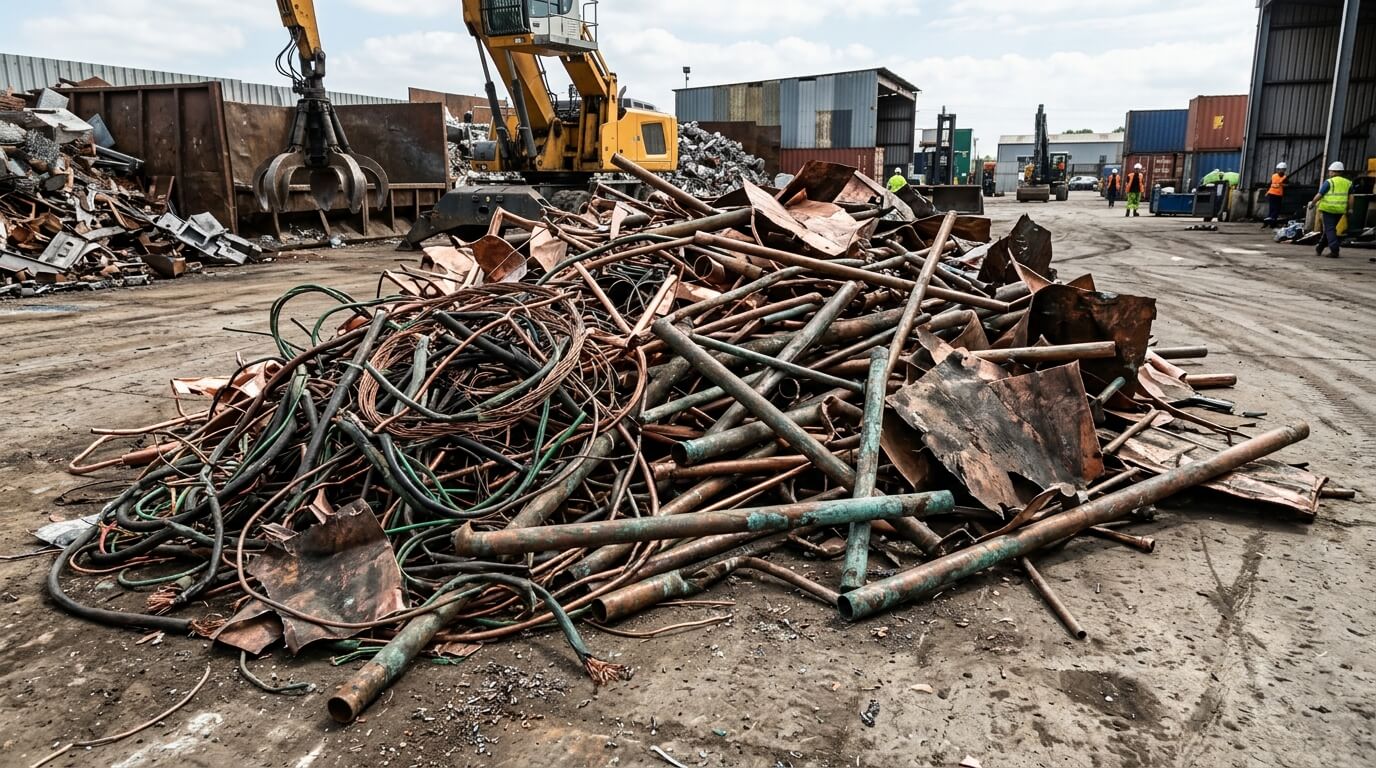
Copper remains the most valuable and widely traded scrap metal in Australia, making it a key source of revenue for electricians, plumbers, contractors, demolition businesses, and homeowners. Understanding the copper scrap price per kg in Australia (2026) is essential for maximising returns and ensuring valuable material is not sold below market value.
One of the biggest misconceptions among sellers is that all copper scrap is worth the same amount. In reality, copper prices vary significantly depending on grade, purity, and contamination levels. Premium materials such as bright copper wire typically attract the highest prices, while #1 copper, #2 copper, and insulated copper products are valued differently based on processing requirements and metal recovery rates.
Because copper is a globally traded commodity, Australian scrap prices are heavily influenced by international market conditions, particularly the London Metal Exchange (LME) benchmark. Supply constraints, infrastructure spending, electrification projects, and renewable energy demand continue to support strong copper pricing in 2026.
Current Copper Scrap Prices in Australia (2026)
Copper scrap prices in Australia remain among the highest of all recyclable metals due to strong global demand, limited mining supply, and growing use in electrical infrastructure, renewable energy systems, and electric vehicles. The value of copper scrap depends largely on purity, contamination levels, and the amount of processing required before recycling.
Average Copper Scrap Price Per Kg
| Copper Grade | Typical Price (AUD/kg) |
|---|---|
| Bright Bare Copper Wire | $10.00 – $15.00 |
| #1 Copper | $9.00 – $13.50 |
| #2 Copper | $7.00 – $10.50 |
| Insulated Copper Wire | $2.00 – $8.00 |
| Copper Pipes & Tubing | $8.00 – $13.00 |
| Mixed Copper Scrap | $6.00 – $9.00 |
What Affects Copper Scrap Prices?
Copper scrap values vary based on several key factors:
- Purity level and copper content
- Contamination from paint, solder, insulation, or attached materials
- Grade classification such as bright copper, #1 copper, or #2 copper
- Quantity available, with larger loads often receiving stronger pricing
- Global copper market conditions and LME benchmark prices
- Export demand from international refiners and manufacturers
Bright Bare Copper Wire (Highest Value)
Bright bare copper wire is the highest-value copper scrap category in Australia and consistently attracts premium prices from recyclers and refiners. It represents the purest form of recyclable copper and requires very little processing before being returned to the manufacturing supply chain.
This grade consists of clean, shiny copper that is free from paint, solder, insulation, coatings, and significant corrosion. It is most commonly recovered from stripped electrical wiring and cable installations.
The reason bright copper commands the highest prices is its exceptional purity and recovery efficiency. Because refiners can process it with minimal preparation, it is highly sought after in both domestic and export markets.
Typical value: $10.00–$15.00/kg
Bright copper remains the benchmark for copper scrap pricing, with other copper grades generally valued relative to its market rate. Clean, uncontaminated material consistently achieves the strongest returns due to its high metal content and strong demand from recycling facilities.
1 Copper
#1 copper is one of the most valuable copper scrap grades after bright bare copper wire. It includes clean copper pipes, busbars, unalloyed copper solids, and thick copper wire that meets strict quality standards.
To qualify as #1 copper, the material should have minimal contamination and be free from excessive oxidation, solder, brass fittings, and other attached metals. Because it contains a high percentage of recoverable copper, recyclers pay strong rates for properly prepared material.
Typical value: $9.00–$13.50/kg
#2 Copper
#2 copper refers to copper material that contains minor contamination or surface degradation. This category commonly includes painted copper, oxidised copper, soldered copper pipe, and copper with light contamination that prevents it from qualifying as #1 grade.
Although still highly valuable, #2 copper requires additional processing and cleaning before recycling, which reduces its overall market value compared to cleaner grades.
Typical value: $7.00–$10.50/kg
Why Copper Scrap Prices Follow LME Markets
What Is the LME?
The London Metal Exchange (LME) is the world's leading marketplace for industrial metals and serves as the primary benchmark for global copper pricing. Because copper is traded internationally, Australian scrap prices are closely linked to movements in the LME copper market.
Copper prices established on the LME influence how Australian scrap yards, copper exporters, metal recyclers, and industrial buyers value recyclable copper materials. As a result, local scrap prices often move in the same direction as global copper markets.
When global copper prices rise, recyclers and refiners are typically willing to pay more for scrap copper. This often leads to stronger competition among buyers and increased demand for high-quality copper scrap.
Conversely, when LME copper prices decline, scrap copper values generally soften as refiners and processors adjust purchasing rates to reflect lower market prices.
Market Impact
Higher LME copper prices typically result in:
- Increased scrap copper prices
- Stronger buyer competition
- Greater demand from recyclers and refiners
- Improved returns for sellers
Lower LME copper prices generally lead to:
- Reduced scrap copper pricing
- Softer market demand
- More conservative buying activity
Global Demand Drives Copper Value
Copper remains one of the world's most important industrial metals, and long-term demand growth continues to support strong scrap copper prices in Australia and international markets.
The metal plays a critical role in modern infrastructure due to its excellent electrical conductivity, durability, and recyclability. As industries transition toward electrification and renewable energy, copper consumption continues to increase across multiple sectors.
Copper is essential for:
Electric vehicles (EVs)
Renewable energy systems
Power transmission and distribution networks
Residential and commercial construction
Data centres and AI infrastructure
These industries require substantial quantities of copper for wiring, motors, transformers, batteries, and electrical components. As global investment in energy transition and digital infrastructure accelerates, demand for both primary and recycled copper remains strong.
How to Strip Copper Wire Properly
Why Strip Copper Wire?
Removing insulation from copper wire can significantly increase its scrap value because recyclers are able to recover clean copper with minimal additional processing.
The difference in pricing between insulated wire and clean bright copper can be substantial, particularly for larger quantities.
| Material | Typical Value (AUD/kg) |
|---|---|
| Insulated Copper Wire | $2–$8/kg |
| Bright Copper Wire | $10–$15/kg |
Clean, bare copper wire is classified as a premium-grade material and typically receives the highest scrap prices available in the copper recycling market. In contrast, insulated wire requires additional labour and processing to separate the copper from the insulation, which reduces its value.
Value Impact
For small quantities, the difference may be modest. However, for electricians, contractors, demolition businesses, and industrial sellers handling larger volumes, converting insulated wire into clean bright copper can result in significantly higher overall returns.
Important Consideration
Before stripping wire, it is important to consider the time and labour involved. The increase in value should outweigh the effort required, particularly when dealing with lower-grade or thin-gauge cable. Clean, high-copper-content wire generally offers the greatest benefit from stripping and sorting.
Best Practices
Maximising copper scrap value starts with proper preparation. Clean, well-sorted copper consistently attracts higher prices because it reduces processing costs and improves recovery efficiency for recyclers.
Using dedicated wire-stripping tools helps preserve copper quality while removing insulation safely and efficiently. Separating different copper grades before selling also ensures each material is priced according to its actual value rather than being classified as mixed copper.
Copper should be kept clean, dry, and free from dirt, oil, paint, and other contaminants. Fully removing plastic insulation from suitable cable can also significantly increase the value of higher-grade copper wire.
What Not to Do
Certain preparation methods can dramatically reduce the value of copper scrap and may lead to lower offers from buyers.
Burning insulation from copper wire is strongly discouraged because it contaminates the metal, creates environmental issues, and often results in material being downgraded. Mixing copper with brass, aluminium, steel, or other metals can also reduce pricing because buyers must spend additional time sorting the load.
Excessive contamination from paint, solder, dirt, grease, or non-metal attachments will generally lead to discounts and lower recovery values.
Where to Sell Copper Scrap in Australia
Local Scrap Yards
Local scrap yards are a practical option for sellers with smaller quantities of copper scrap. They typically offer straightforward transactions, quick weighing, and immediate payment, making them suitable for household sellers and occasional recyclers.
Industrial Copper Buyers
Industrial copper buyers specialise in larger commercial and industrial loads. These buyers often work directly with electricians, contractors, demolition companies, and manufacturing businesses that generate significant quantities of copper scrap.
Because of the larger volumes involved, industrial buyers may offer stronger pricing, collection services, and more flexible commercial arrangements than standard scrap yards.
Sell Copper Online
Online scrap marketplaces allow sellers to compare multiple buyer offers before committing to a sale. This creates greater pricing transparency and can help maximise returns, particularly for larger or higher-value copper loads.
Recommended platforms include:
FAQs
What is the current copper scrap price per kg in Australia?
Copper scrap prices in Australia typically range from $7 to $15 per kg, depending on the grade, purity, contamination level, quantity, and prevailing market conditions. Bright bare copper wire generally attracts the highest prices.
What is the difference between #1 and #2 copper?
#1 copper is clean, unalloyed, and largely free from contamination, making it one of the most valuable copper grades. #2 copper contains impurities such as paint, solder, oxidation, or minor attachments, which require additional processing and reduce its scrap value.
Is bright copper wire worth more than copper pipe?
Yes. Bright bare copper wire is usually the highest-paying copper scrap category because it offers exceptional purity and requires minimal processing. Clean copper pipe can also attract strong prices but generally trades below bright copper wire.
Should I strip copper wire before selling?
For larger quantities, stripping copper wire can significantly increase its value by converting insulated wire into higher-grade bright copper. However, the time and labour involved should be considered, particularly when dealing with smaller volumes or low-value cable.
Conclusion
The copper scrap price per kg in Australia in 2026 remains among the highest of all recyclable metals, supported by strong global demand, infrastructure investment, electrification projects, and limited supply growth. As a result, copper continues to be one of the most profitable materials for homeowners, electricians, contractors, and industrial scrap sellers.
Bright bare copper wire consistently commands premium prices due to its exceptional purity and minimal processing requirements, while #1 copper and #2 copper continue to offer strong returns when properly sorted and prepared. The difference between copper grades can have a significant impact on overall earnings, particularly for larger volumes.