

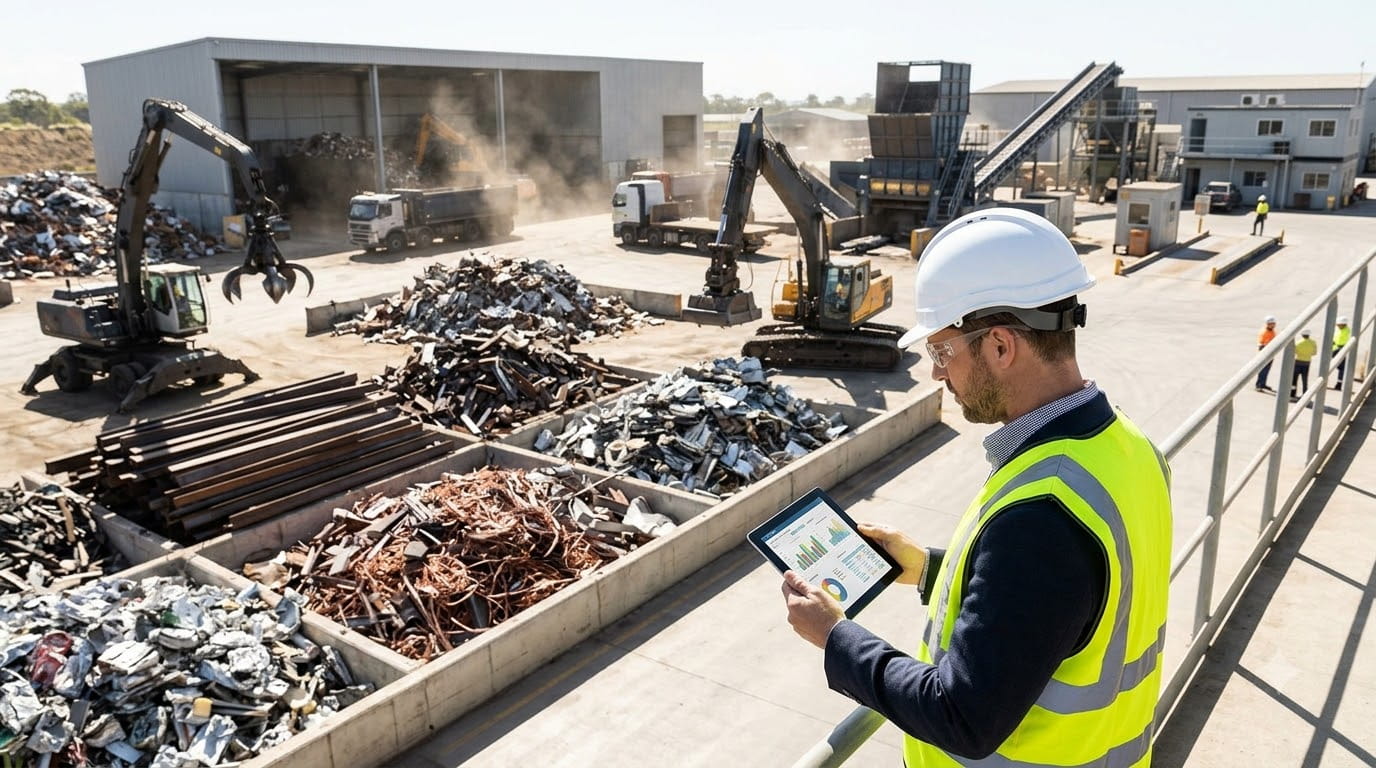
Scrap recycling can become a sustainable business when recyclers source materials efficiently, maintain consistent quality, control operating costs, and build reliable relationships with buyers. Materials such as copper, aluminium, steel, electronic waste, plastics, and cardboard can have commercial value when collected, sorted, processed, and sold according to buyer requirements.
However, profitability does not come from collecting scrap alone. Recyclers must understand material grades, monitor purchase and selling prices, manage transportation expenses, and find suitable buyers for each load. A small difference in purchasing cost, material quality, or logistics can affect the final margin.
Online trading platforms also give recyclers another way to connect with potential buyers and explore opportunities beyond their immediate business networks.
1. Understanding the Scrap Recycling Business Model
Scrap recyclers generate revenue by acquiring recyclable materials and selling them to businesses that reuse, process, or manufacture products from those materials.
The business model can vary depending on the recycler’s resources, location, material specialisation, and access to suppliers.
Some recyclers collect scrap from households and small businesses. Others purchase industrial waste in bulk, operate processing facilities, or trade large quantities with manufacturers and other recycling businesses.
Common scrap recycling business models include:
- Collection and resale: Collecting scrap from local sources and selling it to recycling facilities or larger dealers.
- Sorting and processing: Separating mixed materials, removing unwanted items, and preparing scrap to meet buyer specifications.
- Bulk trading: Purchasing larger quantities from suppliers and selling them to industrial buyers or processors.
- Specialised recycling: Focusing on particular materials, such as copper wire, aluminium, stainless steel, electronic waste, or plastics.
- B2B scrap trading: Connecting with commercial suppliers and buyers to source and sell materials in larger quantities.
Each model has different capital, equipment, labour, storage, and transportation requirements. Choosing a suitable model helps recyclers align their operations with available resources and market demand.
2. Source Scrap Materials at Competitive Costs
Purchasing materials at the right cost is one of the most important factors in building a profitable recycling business.
Recyclers may source scrap from manufacturing plants, construction companies, demolition contractors, automotive businesses, electrical contractors, warehouses, retailers, and other scrap dealers.
Building repeat supplier relationships can improve access to regular material volumes. However, the lowest purchase price is not always the best deal. Material quality, contamination, collection requirements, transport distance, and the amount of usable material must also be considered.
For example, a mixed load offered at a low price may require additional sorting and disposal. A more expensive load of clearly graded copper or aluminium might be easier to process and sell.
Recyclers should evaluate the expected selling price against the complete cost of acquiring and preparing each load. This helps them decide which materials are worth purchasing and which deals carry excessive risk.
3. Sort and Process Materials to Improve Their Marketability
Sorting is an essential part of scrap recycling because buyers often have specific requirements for material type, grade, cleanliness, and preparation.
A mixed load containing several metals may be less attractive to a buyer than separate, clearly identified lots. Proper separation helps buyers understand what they are purchasing and makes it easier to compare offers.
Processing methods depend on the material. Recyclers may use cutting, baling, shredding, dismantling, or other preparation methods where appropriate. The objective is to prepare materials for handling, transport, and further processing without introducing unnecessary costs or safety risks.
Examples include separating copper wire from other materials, removing unsuitable attachments from aluminium scrap, sorting steel by grade, and keeping electronic scrap categories distinct.
Processing is not automatically profitable. Labour, equipment, energy, storage, and disposal costs can outweigh the additional revenue. Recyclers should compare the expected selling value of processed material with the cost of preparing it.
4. Understand What Determines Scrap Selling Prices
Scrap prices vary according to material type, grade, quality, location, quantity, buyer demand, and market conditions. International reference prices may provide useful context for certain metals, but they do not necessarily represent the price a recycler will receive for a particular load.
Several factors influence the value of a scrap transaction.
Material grade and composition: Different grades can have different values because they contain different proportions of recoverable material or require different processing methods.
Contamination and moisture: Dirt, plastics, mixed metals, attachments, and excess moisture can affect the accepted weight or the buyer’s assessment.
Quantity and consistency: Buyers may prefer larger, consistent loads that fit their processing requirements. However, minimum quantities and commercial terms vary between buyers.
Transportation and delivery terms: A strong offer may become less attractive when freight, loading, insurance, or other delivery expenses are included.
Market conditions: Supply, demand, manufacturing activity, and changes in metal markets can influence buyer offers.
Recyclers should compare the full transaction economics rather than focusing only on the quoted price per kilogram or tonne.
5. Calculate Costs Before Accepting a Deal
A recycler can report high sales revenue and still make little profit if operating expenses are not controlled.
The main costs may include material purchases, labour, transportation, sorting, processing, storage, equipment maintenance, packaging, compliance, and waste disposal.
Consider this illustrative transaction:
| Transaction item | Amount |
|---|---|
| Scrap purchase cost | $8,000 |
| Selling revenue | $10,000 |
| Transport and other direct costs | $1,200 |
| Gross contribution before overheads | $800 |
In this example, the recycler generates $2,000 between the selling revenue and purchase cost. After deducting $1,200 in other direct costs, $800 remains to cover overheads and contribute to profit.
This is an illustrative calculation, not a typical industry margin. Actual results depend on material quality, negotiated prices, operational expenses, and transaction terms.
Recyclers should also account for payment delays, rejected material, unexpected freight costs, equipment downtime, and changes in selling prices. Maintaining a cost record for each load makes it easier to identify which materials and suppliers offer better commercial opportunities.
6. Find Reliable Buyers and Expand Sales Opportunities
Access to suitable buyers is just as important as sourcing materials at competitive prices. A recycler may have quality scrap available but struggle to achieve a good result if only a few buyers are aware of the stock.
Traditional buyer networks remain valuable, particularly when they provide consistent demand and dependable transactions. Recyclers can strengthen these relationships by providing accurate material descriptions, consistent quantities, clear photographs, and reliable delivery information.
They can also expand their reach through digital marketplaces.
ScrapTrade is a global online marketplace where scrap buyers and sellers can discover trading opportunities across different materials and markets. Recyclers can use the platform to present available scrap, connect with potential buyers, and review offers based on their listing terms.
A well-prepared listing should identify the material and grade, approximate quantity, location, condition, photographs, and relevant delivery requirements. Clear information helps potential buyers evaluate whether the load suits their needs.
ScrapTrade facilitates connections between trading businesses; it does not take ownership of the listed material. Buyers and sellers should confirm specifications, payment terms, logistics, and other transaction conditions before proceeding.
7. Use Digital Tools to Improve Business Decisions
Digital tools can help recyclers organise purchasing information, sales records, stock details, and supplier relationships. Accurate records also make it easier to compare the performance of different materials and transactions.
For example, a recycler can track:
- Purchase price and supplier details for each load.
- Material grade, quantity, inspection results, and contamination.
- Buyer offers, agreed selling price, and delivery terms.
- Transportation, labour, processing, and other direct costs.
- Payment status and final transaction contribution.
These records can reveal patterns that are difficult to identify when transactions are managed through scattered messages or spreadsheets.
Online marketplaces offer a separate benefit: they help businesses discover potential trading partners and present available materials to a wider audience. Internal operational software and online trading platforms serve different purposes, but both can support better commercial decisions.
8. Build Long-Term Profitability Through Consistent Operations
A profitable recycling business depends on repeatable processes rather than isolated high-value deals.
Recyclers can improve consistency by setting clear purchasing criteria, checking incoming material, maintaining safe storage areas, monitoring equipment costs, and documenting every transaction. They should also avoid buying unfamiliar materials without understanding the grade requirements and likely resale options.
Diversifying across suitable material categories can create additional opportunities, but expansion should be based on buyer demand, processing capability, storage space, and working capital.
Developing reliable supplier and buyer relationships is equally important. Businesses that communicate clearly, deliver material as described, and resolve discrepancies professionally are better positioned to build repeat trading relationships.
International trading may create access to additional buyers, but it can also introduce freight, documentation, customs, payment, and regulatory considerations. Recyclers should confirm the applicable requirements before committing to cross-border transactions.
FAQs
How do scrap recyclers make money?
Scrap recyclers generally earn revenue by purchasing or collecting recyclable materials, sorting or processing them where appropriate, and selling them to buyers. Their financial results depend on the selling price after accounting for material costs, transport, labour, processing, and overheads.
Which scrap materials can be profitable to recycle?
Copper, aluminium, steel, stainless steel, electronic waste, plastics, cardboard, and other recoverable materials can offer business opportunities. Profitability varies with grade, quantity, local demand, processing requirements, and the cost of obtaining and selling each material.
How can a small recycler find more buyers?
Small recyclers can develop direct relationships with local processors and industrial businesses, improve their material listings, and use online marketplaces to discover additional potential buyers. Clear specifications and accurate quantities help buyers assess available loads.
Does processing scrap always increase profit?
No. Processing can improve material separation and marketability, but equipment, labour, energy, and disposal costs may exceed the additional revenue. Recyclers should calculate the expected return before investing in additional processing.
Conclusion
Recyclers turn scrap into a profitable business by combining competitive sourcing, accurate grading, suitable processing, cost control, and reliable buyer relationships. Understanding the full economics of each load helps businesses make better purchasing and selling decisions.
Digital tools and online marketplaces can support this process by improving recordkeeping and expanding access to potential trading partners. Recyclers looking to explore new sales opportunities can visit ScrapTrade, list available materials, and connect with potential buyers through a global scrap trading marketplace.