

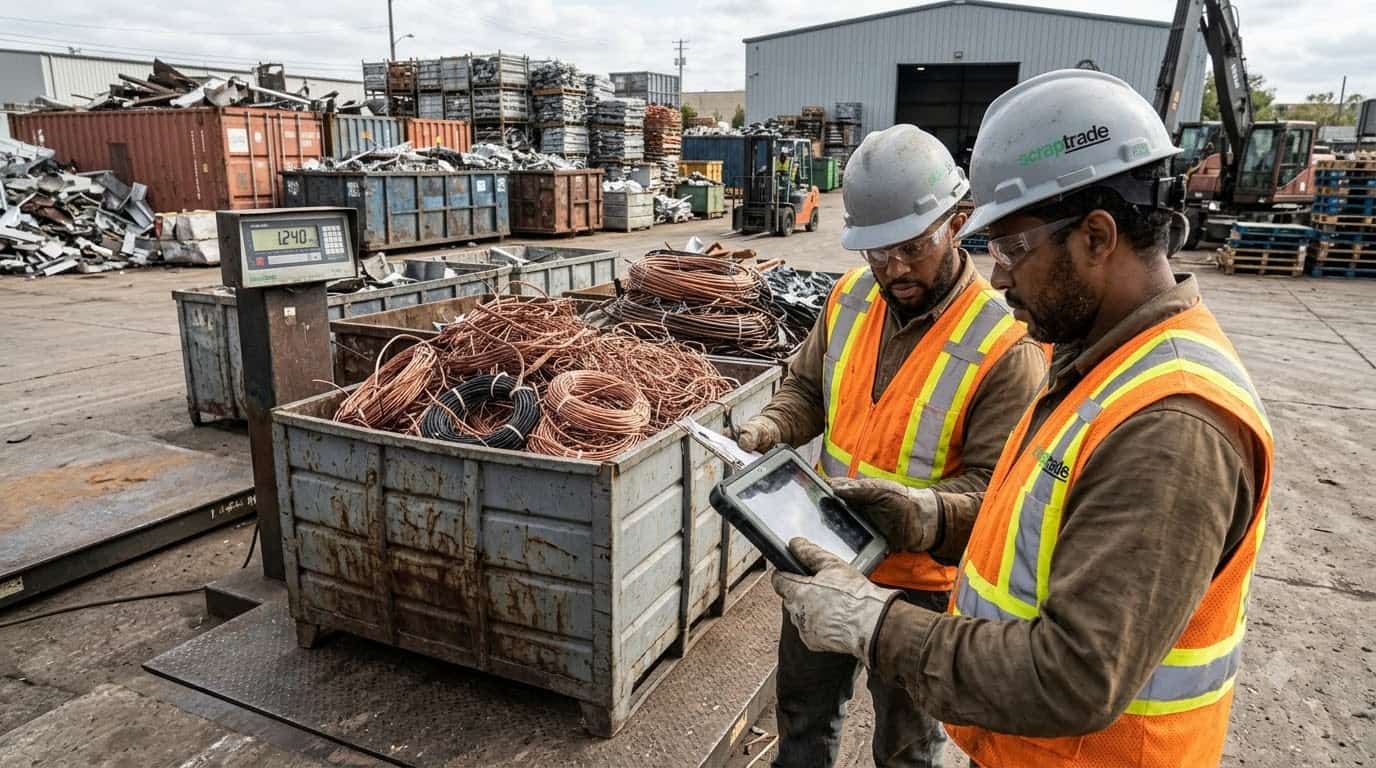
Increasing profit in the scrap business is not always about collecting more material. Smart scrap collectors focus on buying the right materials, reducing unnecessary costs, improving sorting accuracy, and finding suitable buyers before committing to a deal. Small improvements across these activities can help protect margins and make the business more sustainable.
Scrap collectors work with a wide range of materials, including copper, aluminium, steel, brass, electronic waste, vehicle scrap, and industrial offcuts. Each category has different quality requirements, handling needs, and buyer expectations. Understanding these differences helps collectors make better purchasing and selling decisions.
This guide explains practical ways scrap collectors can improve their margins, manage costs, and discover new trading opportunities.
1. Know the Value of the Material Before Buying
One of the most important ways to protect a margin is to understand what a scrap load is worth before purchasing it.
The value of scrap depends on several factors, including material type, grade, cleanliness, quantity, location, and buyer specifications. Two loads that look similar may receive different offers if their composition or condition differs.
For example, clean copper wire may be assessed differently from insulated cable. Similarly, sorted aluminium extrusion may receive different offers from mixed aluminium containing attachments or other materials.
Before buying, collectors should identify the material as accurately as possible and request relevant details from the supplier. Photographs, estimated weights, material specifications, and inspection access can help buyers assess the opportunity.
Reference prices can support initial estimates, but they should not be treated as guaranteed selling prices. The actual offer depends on the material and the terms agreed with the buyer.
2. Sort Scrap to Match Buyer Requirements
Sorting can improve the commercial appeal of a load when it separates materials that buyers value or process differently.
Mixed loads may contain several metal types, different grades, attachments, and contaminants. If the buyer must carry out additional sorting, the offer may reflect the extra work, processing costs, and uncertainty.
Collectors can reduce this problem by separating materials at the collection point whenever practical.
Common sorting practices include separating ferrous from non-ferrous metals, keeping copper and brass apart, distinguishing different aluminium categories, and removing non-metal attachments when the buyer's specifications require it.
However, sorting is not automatically profitable. Labour, equipment, storage, and handling costs must be considered. Before investing time in further separation, confirm whether the expected improvement in the buyer's offer justifies the expense.
3. Reduce Collection and Transportation Costs
Transport can have a significant effect on the margin from a scrap transaction, particularly when collecting small loads from multiple locations.
Smart collectors plan routes, coordinate collection schedules, and assess whether the quantity available justifies the journey. Where practical, combining compatible collections can reduce repeated trips and improve vehicle utilisation.
Before accepting a collection, consider the distance, expected quantity, loading time, site access, labour requirements, and delivery destination. A nearby small load may be less attractive than a larger load farther away—or the reverse—depending on the full costs.
Collectors should also confirm who is responsible for loading, weighing, transport, and unloading. Unclear arrangements can create unexpected expenses or disputes.
The objective is not simply to minimise distance. It is to control the total cost of collecting and delivering each load while maintaining reliable service for suppliers and buyers.
4. Build Relationships With Reliable Suppliers
Regular access to suitable scrap can help collectors plan their operations and reduce the time spent searching for material.
Potential suppliers include manufacturing businesses, construction contractors, electrical companies, automotive workshops, demolition operators, warehouses, and other businesses that generate recyclable materials.
Instead of relying entirely on occasional collections, collectors can develop relationships with suppliers that produce scrap consistently.
To build these relationships, communicate clearly about the materials accepted, collection arrangements, weighing procedures, payment terms, and documentation. Reliable service can encourage suppliers to contact the same collector when new material becomes available.
Keep records of supplier contacts, material categories, previous quantities, collection dates, and any quality issues. Over time, these records can help identify the most suitable sourcing relationships.
Collectors should still assess each load individually. A regular supplier does not guarantee that every load will meet the required grade or provide an acceptable margin.
5. Compare Offers From Multiple Potential Buyers
Selling to the first available buyer may be convenient, but it does not always produce the best commercial outcome.
Different buyers may specialise in different materials, require different quantities, or operate in different locations. Their offers may also vary according to quality specifications, transport arrangements, payment terms, and inspection conditions.
Where possible, collectors should compare offers from more than one suitable buyer. The comparison should consider the complete transaction rather than the headline price alone.
For example, one buyer may offer a higher price but require the seller to arrange transport. Another may offer a lower price but provide a more convenient collection arrangement. The better option depends on the total costs and risks.
Before accepting an offer, confirm the material grade, price basis, quantity, inspection procedure, final weighing method, collection responsibilities, and payment conditions.
6. Use Online Marketplaces to Discover Buyers
Traditional buyer relationships remain valuable, but collectors can expand their reach by exploring online scrap marketplaces.
Digital platforms allow businesses to present available material and discover potential trading partners beyond their existing contacts. This can be useful when selling bulk loads, specialised grades, or materials for which the local buyer network is limited.
ScrapTrade is a global online scrap marketplace where buyers and sellers can explore listings and potential trading opportunities.
Collectors can improve their listings by including accurate material descriptions, clear photographs, estimated quantities, location information, and relevant quality details. Buyers can then assess whether a listing matches their requirements before proceeding with further discussions.
An online listing does not guarantee a sale or the highest possible price. Collectors should verify potential counterparties, confirm commercial terms, and assess transport and handling costs before agreeing to a transaction.
Combining online sourcing with direct supplier and buyer relationships can provide more options when evaluating a deal.
7. Track Every Cost and Calculate the Real Margin
A transaction can appear profitable when comparing only the purchase and selling prices. However, the remaining margin may be much smaller after collection, labour, sorting, transport, storage, and other direct costs.
Consider this illustrative example:
| Transaction item | Amount |
|---|---|
| Scrap purchase cost | $1,000 |
| Sale revenue | $1,450 |
| Collection and transport | $180 |
| Sorting and labour | $100 |
| Other direct costs | $50 |
| Remaining gross contribution | $120 |
In this example, the difference between the sale revenue and purchase cost is $450. After $330 in additional direct costs, only $120 remains before general overheads, taxes, financing costs, and other expenses.
8. Improve Weighing and Quality Documentation
Weight and quality disputes can reduce the expected return from a transaction. A difference between estimated and accepted weight, or between the described and delivered material, may affect the final payment.
Collectors should use suitable weighing equipment and maintain records of gross weight, tare weight, and net weight where applicable. Keep weighbridge tickets, photographs, inspection notes, and delivery records for transactions where these documents are relevant.
Material descriptions should accurately reflect the load. Avoid describing mixed or contaminated material as a clean, single-grade product unless it meets the buyer's specifications.
Agree on the inspection process and how discrepancies will be handled before delivery. Clear documentation helps both parties understand the basis of the transaction and can reduce avoidable disagreements.
9. Choose New Materials Carefully
Expanding into additional material categories can create new opportunities, but collectors should first understand the costs, handling requirements, and buyer demand associated with each material.
For example, a collector familiar with steel may consider aluminium or copper. However, non-ferrous metals require accurate identification, and certain materials may need specialised processing or storage.
Electronic waste, batteries, and some industrial scrap can present additional safety, environmental, or regulatory requirements. Collectors should not purchase unfamiliar materials without understanding how to handle them safely and identify suitable buyers.
A sensible approach is to research the category, confirm buyer specifications, calculate likely costs, and begin with a manageable quantity when appropriate.
FAQs
How can scrap collectors increase profit margins?
Collectors can improve margins by purchasing carefully, sorting material to buyer specifications, reducing collection costs, comparing buyer offers, maintaining accurate records, and avoiding loads that are unlikely to cover their full costs.
Does sorting scrap always increase its value?
No. Sorting may improve buyer acceptance or the offer for certain materials, but labour, equipment, and handling costs can outweigh the benefit. Collectors should confirm buyer requirements and compare the expected improvement with the cost of sorting.
How can small scrap collectors find more buyers?
Small collectors can develop direct relationships with recyclers and dealers, ask existing contacts for referrals, and use online marketplaces to discover potential trading partners. Clear listings and accurate material details help buyers evaluate available scrap.
Why is tracking scrap costs important?
Tracking purchase, collection, labour, transport, processing, and other direct costs helps collectors understand how much remains from each transaction. It also supports better decisions about which materials and routes to prioritise.
Conclusion
Smart scrap collectors increase their margins by managing the entire transaction, from sourcing and sorting to transportation, buyer selection, weighing, and payment. The key is to understand the full cost of every load and avoid making purchasing decisions based only on an expected resale price.
Reliable supplier relationships, accurate records, and comparisons between suitable buyers can improve commercial decision-making. Online marketplaces can add another channel for discovering trading opportunities beyond an established local network.
For collectors looking to broaden their buyer network, ScrapTrade provides a global online marketplace for exploring scrap listings and connecting with potential trading partners.