

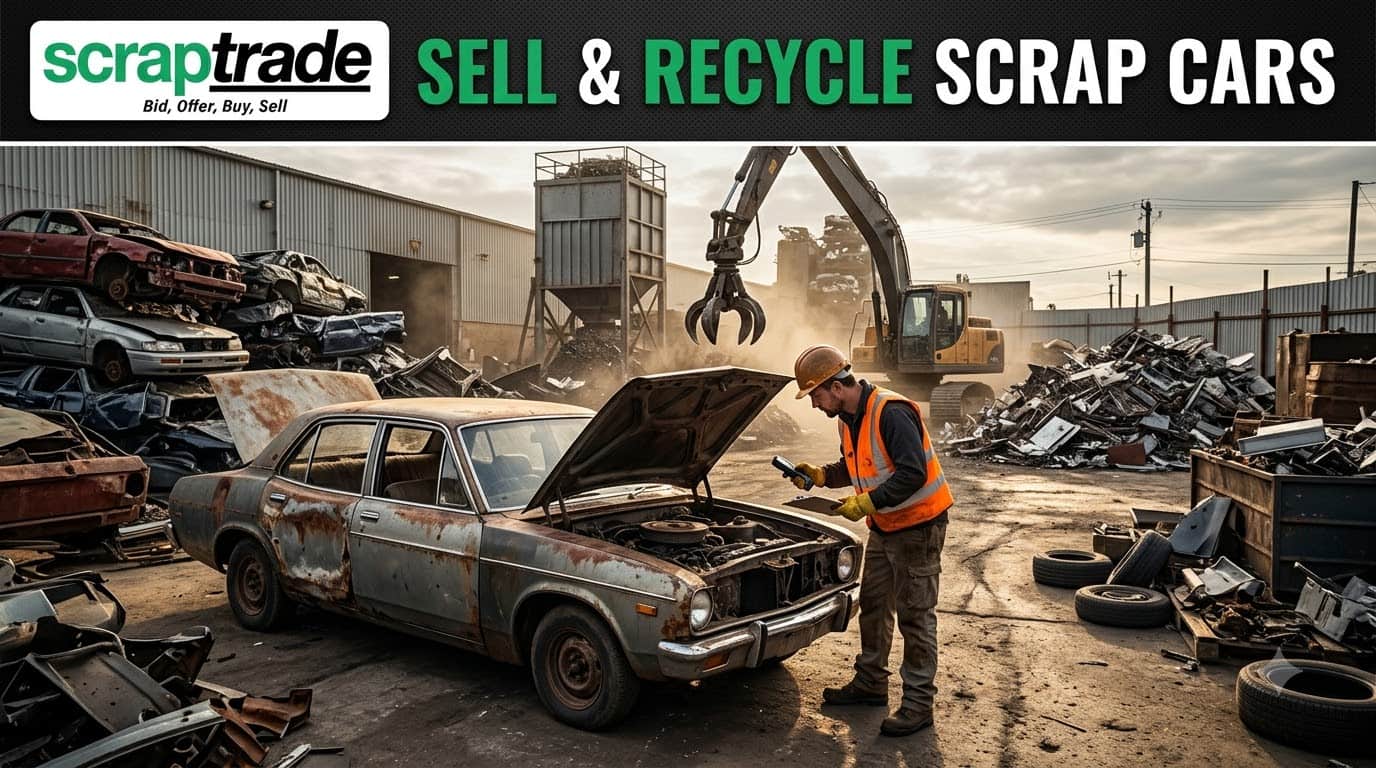
Scrap cars can create several income opportunities for vehicle owners, scrap dealers, auto dismantlers, recyclers, and entrepreneurs. Even when a car is no longer roadworthy, it may still contain reusable spare parts, steel, aluminium, copper, batteries, tyres, and other materials that buyers can recover or recycle.
The key to making money from scrap cars is understanding what the vehicle is worth, identifying potential buyers, and calculating the costs involved before purchasing or selling it. Instead of treating an old vehicle as a single load of scrap metal, businesses can evaluate its individual components and choose a suitable selling strategy.
Platforms such as ScrapTrade can help businesses connect with potential scrap buyers and sellers through a global online marketplace.
1. Understand Where Scrap Car Value Comes From
A scrap car can have value in several different forms. The amount you can earn depends on its condition, model, weight, material composition, local demand, and the cost of processing it.
Reusable spare parts
Some vehicles contain components that can be tested, refurbished, or resold. These may include engines, gearboxes, alternators, starter motors, headlights, mirrors, doors, wheels, and selected interior components.
Parts from popular vehicle models may attract interest from repair shops, mechanics, used-parts dealers, and vehicle owners looking for affordable replacements. However, parts should be inspected and described accurately before resale, and their sale must comply with applicable safety and legal requirements.
Ferrous metals
Steel and iron are major material categories in many end-of-life vehicles. After reusable components and other materials have been removed through an appropriate process, the remaining metal body can be supplied to suitable scrap processors or recyclers.
Ferrous scrap often depends on bulk volume, material preparation, transport costs, and the buyer's grade specifications.
Non-ferrous metals
Vehicles may also contain aluminium, copper, brass, and other non-ferrous materials. These can occur in radiators, wiring, engine components, wheels, and electrical systems.
Separating identifiable materials can help a seller present a clearer offer to potential buyers. The actual value depends on the grade, condition, recoverable quantity, and buyer requirements.
Batteries, tyres, and other components
Batteries, tyres, catalytic converters, and selected electronic components may have separate recovery or resale channels. These materials require appropriate handling and, where applicable, specialist recycling arrangements.
The business opportunity comes from understanding which components can be reused, which can be recycled, and which require specialised treatment.
2. Choose a Scrap Car Business Model
You do not necessarily need to own a dismantling facility to participate in the scrap car industry. The right business model depends on your capital, experience, local market, and regulatory obligations.
Scrap car collection: Source end-of-life vehicles from owners, repair shops, fleet operators, or other permitted channels and arrange their transfer to an authorised or otherwise legally appropriate processing facility.
Vehicle dismantling and parts resale: Purchase suitable vehicles, inspect and remove reusable components, and sell them through established parts channels. This model requires appropriate facilities, skills, storage, and compliance.
Scrap metal trading: Source processed vehicle scrap and sell it in suitable quantities to metal recyclers, processors, or industrial buyers.
Vehicle scrap aggregation: Build relationships with vehicle owners and businesses, then connect available vehicles with suitable dismantlers or buyers. Clarify your role, responsibilities, and fees before arranging a transaction.
Bulk scrap trading: Businesses with sufficient working capital can source multiple vehicles or larger processed scrap lots, subject to supply, demand, logistics, and applicable requirements.
For newcomers, learning the market through collection, aggregation, or partnerships with established processors may be more manageable than immediately investing in a full dismantling operation.
3. Find Scrap Cars at the Right Purchase Price
Profit often depends on the price you pay for the vehicle before processing, transport, and resale costs.
Potential sources include individual vehicle owners, garages, accident-repair businesses, fleet operators, vehicle dealerships, insurance-related salvage channels, and businesses replacing older vehicles.
Build a consistent sourcing network rather than relying only on occasional purchases. Repeat suppliers can help you understand the condition and availability of vehicles before making an offer.
Before buying, collect information about the vehicle's make, model, year, condition, approximate weight, missing components, ownership documentation, and collection requirements. Photographs of the exterior, interior, engine area, and visible damage can help you assess the opportunity.
Always verify ownership and the right to sell or dismantle the vehicle. Check whether the vehicle has liens, restrictions, or other issues that could prevent a lawful transfer.
Do not assume that a damaged car is automatically a profitable purchase. A vehicle with missing components, extensive damage, difficult access, or expensive transport may generate less value than expected.
4. Calculate the Potential Profit Before Buying
The amount received from selling a scrap car is not the same as profit. You must deduct the purchase cost and all relevant expenses.
Use this basic formula:
Estimated gross contribution = Total sales revenue − Vehicle purchase cost − Direct processing and transaction costs
Direct costs may include transport, labour, dismantling, testing, storage, material sorting, disposal, and fees associated with the transaction.
Consider this illustrative example:
| Item | Example amount |
|---|---|
| Cost to purchase a scrap car | $800 |
| Revenue from reusable parts | $450 |
| Revenue from recovered metals | $650 |
| Revenue from other recoverable materials | $100 |
| Total revenue | $1,200 |
| Transport and handling | $120 |
| Processing and sorting | $100 |
| Other direct costs | $50 |
| Total direct costs, including purchase | $1,070 |
| Estimated gross contribution | $130 |
These figures are hypothetical and do not represent current scrap car prices or typical earnings. Actual results vary by vehicle, market, material recovery, and operating costs. The example also excludes general overheads, taxes, and any other unlisted expenses.
Before purchasing a vehicle, estimate the resale value of its parts and materials using realistic buyer quotes. Leave room for unexpected costs, rejected materials, and changes in market prices.
5. Compare Buyers Before Selling
Finding a buyer is only one part of making money. Comparing offers can help you determine which transaction provides the best net return.
Request offers from relevant dismantlers, scrap yards, metal recyclers, and specialist component buyers. Compare more than the headline price.
Check the following:
- Accepted materials: Does the buyer accept the complete vehicle, dismantled components, mixed metal, or only specific grades?
- Pricing method: Is the offer based on vehicle weight, material grade, individual parts, or a fixed vehicle price?
- Inspection and deductions: Can the buyer revise the offer after inspecting the vehicle or weighing the material?
- Transport: Who pays for collection, loading, and delivery?
- Payment terms: When will payment be made, and what conditions must be satisfied?
- Documentation: What ownership, transfer, and recycling records are required?
A higher initial offer may produce a lower net return if it includes substantial transport costs or uncertain deductions. Request written terms and confirm the final arrangement before releasing the vehicle.
6. Use Online Scrap Marketplaces to Find Potential Buyers
Traditional sourcing often relies on local contacts and existing buyer relationships. An online marketplace can provide another way to present available material to potential buyers.
On ScrapTrade, businesses can explore a global scrap trading marketplace and list suitable scrap materials for potential buyers. This can be useful for scrap dealers, recyclers, dismantlers, and businesses handling vehicle-derived metal.
To prepare a useful listing, provide:
- Vehicle or material category, such as end-of-life vehicles, vehicle bodies, steel scrap, aluminium, or copper-bearing components.
- Available quantity and approximate weight, where known.
- Clear photographs showing the condition and material.
- Location and collection or delivery arrangements.
- Known contamination, missing parts, or processing requirements.
- Asking price or preferred offer terms.
Be transparent about whether you are offering a complete vehicle, dismantled parts, or processed scrap. These are different products and may attract different buyers.
ScrapTrade is a marketplace rather than a vehicle owner or scrap buyer. A listing does not guarantee a sale, and buyers and sellers should confirm specifications, payment arrangements, logistics, and applicable compliance requirements directly.
7. Manage Safety and Legal Requirements
Scrap cars can contain fuel, oils, coolant, refrigerants, batteries, airbags, and other potentially hazardous components. Dismantling or processing them without appropriate procedures can create safety, environmental, and legal risks.
Use suitable protective equipment, trained personnel, and approved handling processes. Arrange the recovery, storage, transport, and disposal of hazardous materials through appropriate channels.
Requirements for vehicle ownership transfers, deregistration, dismantling, environmental permits, waste transport, and recycling facilities vary by country and region. Check the rules that apply to your location before starting operations. Where formal vehicle-scrapping registration or authorisation is required, work within that framework.
Keep records of vehicle purchases, ownership checks, material sales, weights, buyer agreements, and payments. Good documentation can help reduce disputes and make business performance easier to evaluate.
FAQs
Is selling scrap cars profitable?
It can be profitable when the purchase price, reusable parts, recoverable materials, processing costs, and resale opportunities are managed carefully. Profit is not guaranteed and varies by vehicle and market.
What parts of a scrap car can be sold?
Depending on condition and local rules, potential resale items include engines, gearboxes, alternators, starter motors, lights, doors, wheels, and selected electronic components. Parts should be inspected and accurately described.
Can I make money from scrap cars without dismantling them?
Potentially. You may operate as a collector or aggregator and arrange transfers to appropriate processing facilities. Your business model must comply with local rules governing vehicle handling, transport, and scrapping.
How can I find buyers for vehicle scrap?
Build relationships with scrap yards, dismantlers, metal recyclers, and parts buyers. You can also use an online marketplace such as ScrapTrade to list suitable scrap materials and reach potential buyers.
Conclusion
Making money from scrap cars requires more than finding an old vehicle and selling it for metal. Successful operators assess reusable parts, identify recyclable materials, source vehicles carefully, calculate total costs, and compare buyer offers before completing a transaction.
Start with a clear business model, maintain accurate records, and build relationships with reliable suppliers and buyers. When you are ready to trade vehicle-derived scrap, explore ScrapTrade to list suitable materials and connect with potential buyers through a global online marketplace.