

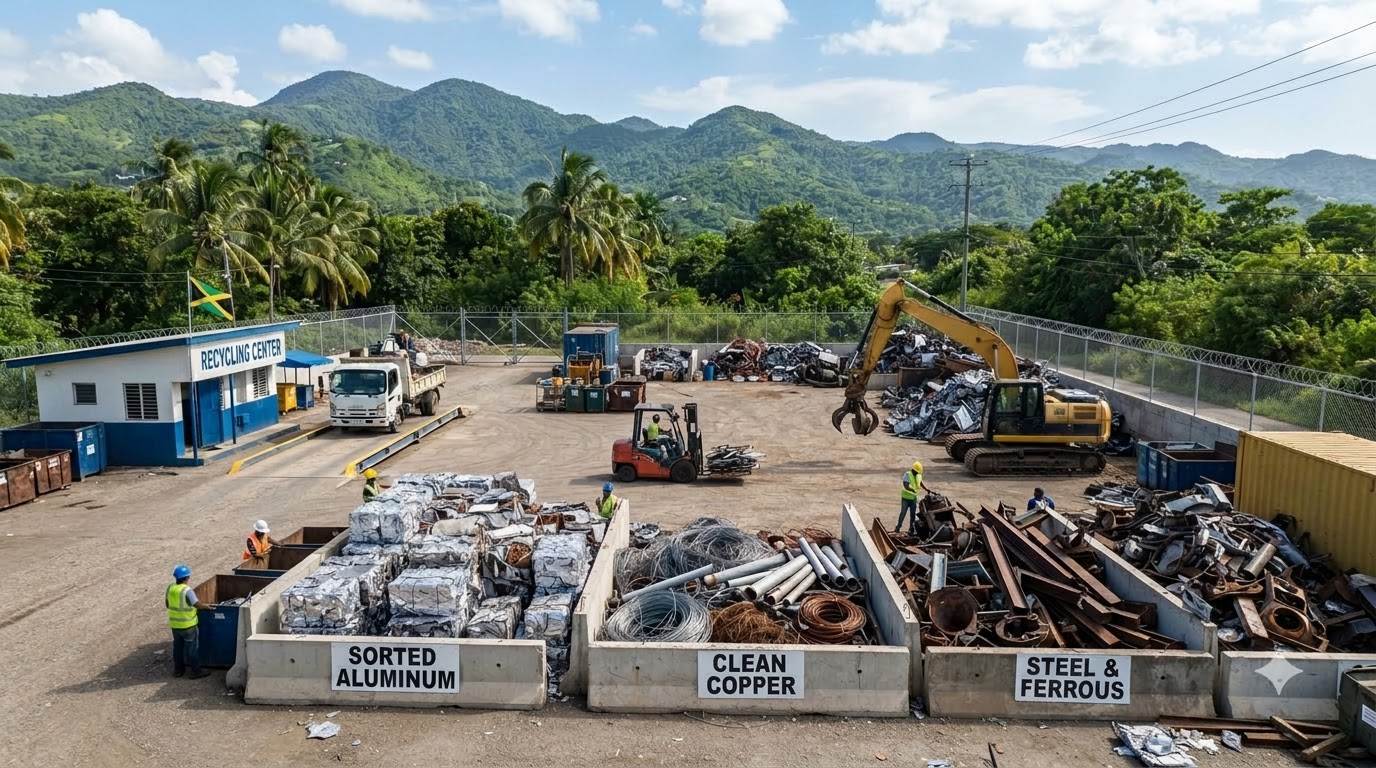
Comprehensive Market Analysis of the Jamaican Scrap Metal Industry: Regulatory Frameworks, Trade Dynamics, Infrastructure Security, and Economic Implications
The scrap metal sector in Jamaica represents a complex nexus of international commodity trade, domestic supply chain logistics, legal regulation, and critical infrastructure management. Historically characterized by rapid market expansions, severe negative externalities, and cyclical state intervention, the industry plays a dual role in the national economy. On one hand, scrap metal exports generate vital foreign exchange earnings and incentivize solid waste recycling across the island. On the other hand, illicit sourcing specifically the widespread theft and destruction of telecommunications, electrical, and public infrastructure has repeatedly forced legislative re-evaluations and temporary trade prohibitions. This report provides an exhaustive investigation of the Jamaican scrap metal market, analyzing its legislative lineage, operational procedures, digital trade architecture, export statistics, infrastructure impacts, and market participants.
Historical Evolution and Legislative Governance Architecture
The governance of Jamaica's scrap metal trade has shifted dramatically over the past three decades from absolute deregulation to a highly controlled, monitored state ecosystem. In 1992, scrap metal was removed from the statutory list of goods requiring an export license under the authority of the Ministry of Industry, Investment and Commerce (MIIC). This deregulation led to rapid, unmonitored growth in scrap collection and export. Between 2005 and 2006, the monetary value of scrap metal exports from Jamaica expanded from US$13.3 million to US$99.58 million, representing an increase exceeding 600 percent in a single year.
However, this rapid commercial growth coincided with severe domestic asset stripping. Unscrupulous traders targeted municipal water pipes, bridges, railway tracks, streetlights, and copper telecommunications lines. In response to widespread public and commercial outcry, the Government of Jamaica (GOJ) promulgated the Trade (Prohibition of Export) (Scrap Metal) Order on October 31, 2007, placing a temporary freeze on all scrap metal exports. Subsequent years saw intermittent re-openings and full operational bans, culminating in a comprehensive structural overhaul that led to the enactment of the Trade (Scrap Metal) Regulations in January 2013, later amended by the Trade (Scrap Metal) Regulations in 2018.
The modern statutory architecture for scrap metal in Jamaica relies on a collaborative, multi-agency regulatory model governed principally by the Trade Act. Five primary entities enforce compliance across the supply chain. The Ministry of Industry, Investment and Commerce sets overall policy directives, oversees statutory regulations, and issues ministerial approvals for restricted or sensitive scrap categories. The Jamaica Trade Board Limited (TBL) acts as the primary licensing authority, processing applications for scrap metal exporters, local dealers, carriers, and individual export shipments. Complementing these administrative functions, the Jamaica Customs Agency (JCA) executes physical on-site container inspections, supervises loading protocols, verifies export cargo integrity, and monitors port departures. The Factories Corporation of Jamaica (FCJ) manages designated central multi-user scrap sites, collects indemnity bonds, and hosts mandatory public viewing periods for collected materials. Finally, the Jamaica Constabulary Force (JCF) conducts mandatory physical inspections prior to baling, reviews police vetting background checks for traders, and investigates infrastructure theft.
Operational Rules, Digital Integration, and Export Compliance
To combat illegal metal sourcing while preserving legitimate export pathways, the GOJ established strict operational controls under the 2013 and 2018 regulations. Exporters, dealers, and transport operators must satisfy detailed physical, administrative, and financial criteria to obtain operational clearance.
Exporters within the general scrap trade are restricted from operating out of unvetted, private yards. Except for industrial manufacturers that generate waste metal as a direct byproduct of their own manufacturing operations, all scrap exporters must operate exclusively out of central multi-user sites managed by the Factories Corporation of Jamaica, such as the designated facilities at Riverton and Elspeth Avenue (off Hagley Park Road) in Kingston. Non-manufacturing exporters must post a mandatory J$7 million indemnity bond with the FCJ prior to commencing operations. This bond serves as a financial guarantee, designed in part to compensate victims of metal theft if stolen property is traced back to a specific exporter's inventory. Furthermore, non-Jamaican citizens applying for licenses must hold valid work permits, and all prospective exporters must submit recommendations signed by a Police Superintendent or higher-ranking officer.
To maintain transparency, materials brought to multi-user sites are subjected to a mandatory public viewing protocol. Scrap metal must remain laid out on site for five days before container loading can begin, permitting members of the public, utility companies, and law enforcement to inspect the inventory for stolen property. Any item deemed suspicious is impounded for an additional ten days to facilitate deeper police and customs investigations. Exporters convicted of purchasing stolen metal face immediate revocation of their export licenses and a mandatory court fine of J$2 million.
Specific metal categories deemed high-risk due to their association with critical national infrastructure are classified as restricted items under the law. Exporting these materials requires explicit, written authorization directly from the Minister of Industry, Investment and Commerce, guided by a specialized technical advisory team. These restricted materials encompass copper wires and electrical cables of any type, brass wire, rods, tubing, air conditioning coils, evaporator coils, condensers, and unattached brass radiators. They also include structural infrastructure assets such as railway lines, steel track fixtures, structural I-beams, metal bridges, highway guard rails, municipal manhole covers, metal signposts, public water or irrigation pipes, electrical transformers, and conveyor system assemblies.
To improve trade facilitation and prevent documentation tampering, the Jamaica Customs Agency and the Trade Board Limited integrated scrap metal export approvals into the Jamaica Single Window for Trade (JSWIFT) platform, completely phasing out manual, paper-based applications. Under the paperless JSWIFT system, exporters submit unified export permit applications, upload supporting documentation, and pay administrative fees online. The system automatically routes the application to Jamaica Customs, where officers conduct physical site inspections, verify cargo sorting according to Harmonized System (HS) codes, and complete digital Cargo Integrity Forms. For sensitive items like copper, multi-agency digital sign-offs are conducted between Customs, the Trade Board, and the Ministry. Upon digital verification from Customs that materials were legally obtained, the Trade Board approves the export license electronically, allowing the trader to download and print the permit. This digital transformation has reduced the processing time for scrap export permits from two to three business days down to one to two hours.
| Regulatory Requirement / Procedure | Statutory Provision / Policy Rule | Operational Metric or Fee Structure | Responsible Agency |
|---|---|---|---|
| Exporter Financial Bond | Non-manufacturing exporters must post security bond. | J$7,000,000 | FCJ / MIIC |
| Regulatory License Fees | Required for exporters, dealers, carriers, and handcart operators. | J$5,000 – J$10,000 | Trade Board Limited |
| Site Inspection & Public Display | Mandatory display of raw scrap prior to container loading. | 5 Days (10 extra days if suspicious) | JCA / JCF |
| Advance Inspection Notice | Exporters must notify authorities prior to packing containers. | Minimum 72 Hours notice | JCA / JCF / TBL |
| Penalties for Theft Conviction | Criminal fine plus immediate license cancellation. | J$2,000,000 fine + lifetime ban | Judicial Courts / MIIC |
| Permit Processing Window | Electronic document submission and approval via JSWIFT. | 1 to 2 Hours (formerly 2–3 days) | JCA / Trade Board Ltd |
Trade Statistics, Export Destinations, and Commodity Breakdown
Scrap metal represents a consistent non-traditional export for Jamaica, consisting primarily of ferrous scrap (steel and cast iron), non-ferrous metals (aluminum, copper, brass), and minor volumes of precious metal waste. The major Harmonized System classifications defining Jamaica's scrap exports include HS 7204 for general ferrous waste and scrap, HS 720410 for cast iron scrap, HS 720421 for stainless steel waste, HS 7404 for copper waste and scrap, and HS 7602 for aluminum waste and scrap.
In 2024, Jamaica's total exports of scrap iron under HS 7204 reached approximately US$14.4 million, ranking as the 14th most exported product from Jamaica out of 653 commodity categories [cite: 17]. In the same period, Jamaica imported a minimal US$240,000 in scrap iron sourced almost exclusively from the United States yielding a net positive trade surplus in ferrous scrap of US$14.16 million. Asian manufacturing economies absorb the vast majority of Jamaica's exported ferrous scrap. Re-smelting mills in Chinese Taipei (Taiwan) and Thailand account for over 93 percent of Jamaica's total exported iron and steel scrap.
| Country / Destination Market | Export Value (USD - 2024) | Market Share (%) | Key Product Focus |
|---|---|---|---|
| Chinese Taipei (Taiwan) | $7,310,000 | ~50.77% | Ferrous Scrap (HS 7204) |
| Thailand | $6,110,000 | ~42.43% | Ferrous Scrap (HS 7204) |
| India | $567,000 | ~3.94% | Ferrous Scrap & Alloys |
| Spain | $320,000 | ~2.22% | Heavy Melting Scrap / Steel |
| Panama | $132,000 | ~0.92% | Mixed Regional Scrap |
| United Arab Emirates | $20,840 | ~0.14% | Stainless Steel Waste (HS 720421) |
| China | $11,350 | ~0.08% | Stainless Steel / Specialty Alloys |
| Total Global Exports (HS 7204) | ~$14,400,000 | 100.0% | Ferrous Category Total |
Market growth dynamics indicate that India has shown rapidly expanding import interest for Jamaican scrap, recording an increase of $340,000 in scrap iron purchases between 2023 and 2024, which represents a 150 percent annual growth rate. Predictive trade growth models suggest that China, Pakistan, and Spain hold the highest untapped export growth potential for Jamaican scrap suppliers over the coming decade.
The Copper Infrastructure Security Crisis and Policy Interventions
While ferrous sarket value of copper has created strong incentives for illegal harvesting, resulting in widespread destruction of public utilities and telecommunications infrastructure. Combined figures presented by utility operacrap forms the bulk of Jamaica's legitimate commercial export volumes, non-ferrous scrap specifically copper cable presents significant national security and economic challenges. The high international mtors estimate that vandalism and metal theft cost Jamaica's national economy at least US$350 million annually in direct asset damage, lost commercial billing, and security mitigation.
In 2022 alone, telecommunications provider Flow Jamaica reported at least US$10 million (J$1.5 billion) in lost revenue resulting from over 630 individual acts of cable theft and infrastructure vandalism. Flow incurs approximately US$2 million annually solely to replace cut copper wire, with cumulative restoration expenditure exceeding US$15 million over a seven-year period. Digicel Jamaica experiences similar operational disruption, spending approximately US$1 million annually in direct cable replacement costs alongside US$3.9 million in broader annual losses from stolen backup batteries (452 units stolen in a 12-month window), vandalized diesel generators (97 sites damaged), and destroyed network shelters.
The theft of telecommunications cables disrupts commercial business districts including the Half-Way-Tree, Cross Roads, and Hagley Park Road corridors leaves entire communities cut off from emergency service access (such as 119 police hotlines, fire, and hospitals), and interrupts online education and banking networks. St. Catherine, specifically the urban centers of Spanish Town and Portmore, represents the parish most heavily targeted by copper thieves, alongside emerging theft hot spots in St. Elizabeth, St. Ann, and St. Mary.
The empirical correlation between open copper export windows and elevated domestic infrastructure theft has prompted strong advocacy from the Private Sector Organisation of Jamaica (PSOJ) and telecommunications executives for drastic state intervention. During previous export moratoriums, copper theft incidents dropped sharply, only to spike immediately upon the resumption of trade. In response, the Ministry of Science, Energy and Technology, supported by MIIC, advocated for a total, permanent suspension of copper scrap exports from Jamaica to destroy the local buy-back market for stolen wire.
Concurrently, the Jamaica Constabulary Force restructured its legal framework to prosecute organized copper theft rings under the Proceeds of Crime Act (POCA) rather than simple larceny charges, allowing the state to seize criminal assets and vehicles used in cable theft. At the same time, Customs and MIIC mandate that any copper submitted for export undergo extensive traceability audits involving the Factories Corporation of Jamaica. Exporters must prove that scrap copper originated from legitimate commercial source material, such as legally auctioned, pre-minced copper cable purchased directly from telecommunications entities. In parallel, telecommunications firms have spent millions encapsulating underground manholes in reinforced concrete, installing real-time network pressure sensors, and partnering with Crime Stop to offer J$1 million cash rewards for information leading to the conviction of copper thieves.
Scrap Metal Market Ecosystem, Entities, and Pricing Mechanisms
Jamaica's domestic scrap metal market operates through an articulated multi-tiered supply chain connecting informal waste collectors at the base to heavily regulated export corporations at the top. At the primary tier, informal individual scrap collectors and handcart operators scavenge metal from residential waste, auto repair shops, construction sites, and municipal landfills, such as the Riverton City Dump. These collectors sell their daily gatherings to registered scrap carriers (comprising 57 licensed transport entities), who convey materials to commercial processing yards. At the secondary tier, licensed local scrap dealers (comprising 48 registered businesses) purchase raw scrap, sort it into distinct metal categories, weigh materials using calibrated digital scales, and perform primary baling or shredding. At the apex of the market, licensed exporters (comprising 12 to 17 active corporate entities) hold valid Trade Board licenses, post the required FCJ performance bond, lease multi-user site loading bays, and execute international shipping contracts.
Several established corporate entities dominate the processing, collection, and export of scrap metal in Jamaica. Located at 383 Spanish Town Road in Kingston, CM Recycling Company Ltd operates as one of the island's premier scrap metal processing facilities, utilizing automated baling, weighing, and sorting infrastructure. Scrap N Go LLC provides islandwide commercial scrap collection, demolition clearing, and digital weighing services for corporate and residential clients. Best Scrap operates out of Riverton City in Kingston, focusing on non-ferrous and ferrous metal aggregation near the primary multi-user loading site. Other prominent licensed operators include Fearon & Davis Trucking & Recycling Co., Caribbean Scrap Metal, and Arete Trading Logistics, which manage integrated transport logistics and bulk regional shipping.
Domestic scrap purchasing rates in Jamaica track global benchmark spot prices established on the London Metal Exchange (LME) and international scrap indexes, adjusted downward to account for local freight, processing, and administrative compliance costs.
| Scrap Metal Category | Sub-Type / Quality Grade | Estimated Benchmark Spot Price Range (USD/lb) | Domestic Sourcing Dynamics |
|---|---|---|---|
| Copper Scrap | Bare Bright / BX / Clean Cable | $3.35 – $4.00 / lb | Highest value per lb; subject to strict legal sourcing documentation. |
| Aluminum / Copper | Clean Radiators | $3.25 – $4.00 / lb | High domestic supply from auto salvage and HVAC maintenance. |
| Brass Scrap | Mixed Brass / Sheet / Honey | $1.45 – $1.88 / lb | Restricted category; requires proof of legal acquisition. |
| Aluminum Scrap | Clean Extrusions / Cast / Rims | $1.27 – $1.88 / lb | Steady supply from automotive and building construction demolition. |
| Dirty Aluminum | Contaminated Scrap / Radiators | $0.25 – $1.30 / lb | Discounted due to processing and separation costs. |
| Lead & Batteries | Automotive Lead-Acid / Lead | $0.43 – $0.82 / lb | High volume; tied to auto battery recycling schemes. |
| Ferrous Scrap | Heavy Melting Steel / Cast Iron | $0.08 – $0.15 / lb | Represents the largest total export volume ($14.4M USD annually). |
Strategic Outlook and Market Trajectory
The scrap metal market in Jamaica occupies a critical intersection between trade policy and industrial security. While the export of scrap iron and aluminum generates valuable foreign currency and provides livelihoods within the informal economy, unmonitored non-ferrous trade poses ongoing risks to telecommunications networks and national infrastructure.
To navigate these challenges, the sector's long-term growth trajectory relies on full digital integration across all regulatory agencies via the JSWIFT single-window portal, ensuring real-time oversight of scrap movements from point-of-sale to container departure. Furthermore, maintaining strict ministerial controls and mandatory sourcing audits on high-risk copper and brass categories allows the government to safeguard national infrastructure while sustaining the uninhibited export of verified ferrous waste. Finally, encouraging informal collectors, carriers, and local yard operators to formalize their operations through recognized trade associations and licensed portals will ensure that Jamaica's scrap metal sector remains commercially viable, internationally competitive, and strictly aligned with national security priorities.