

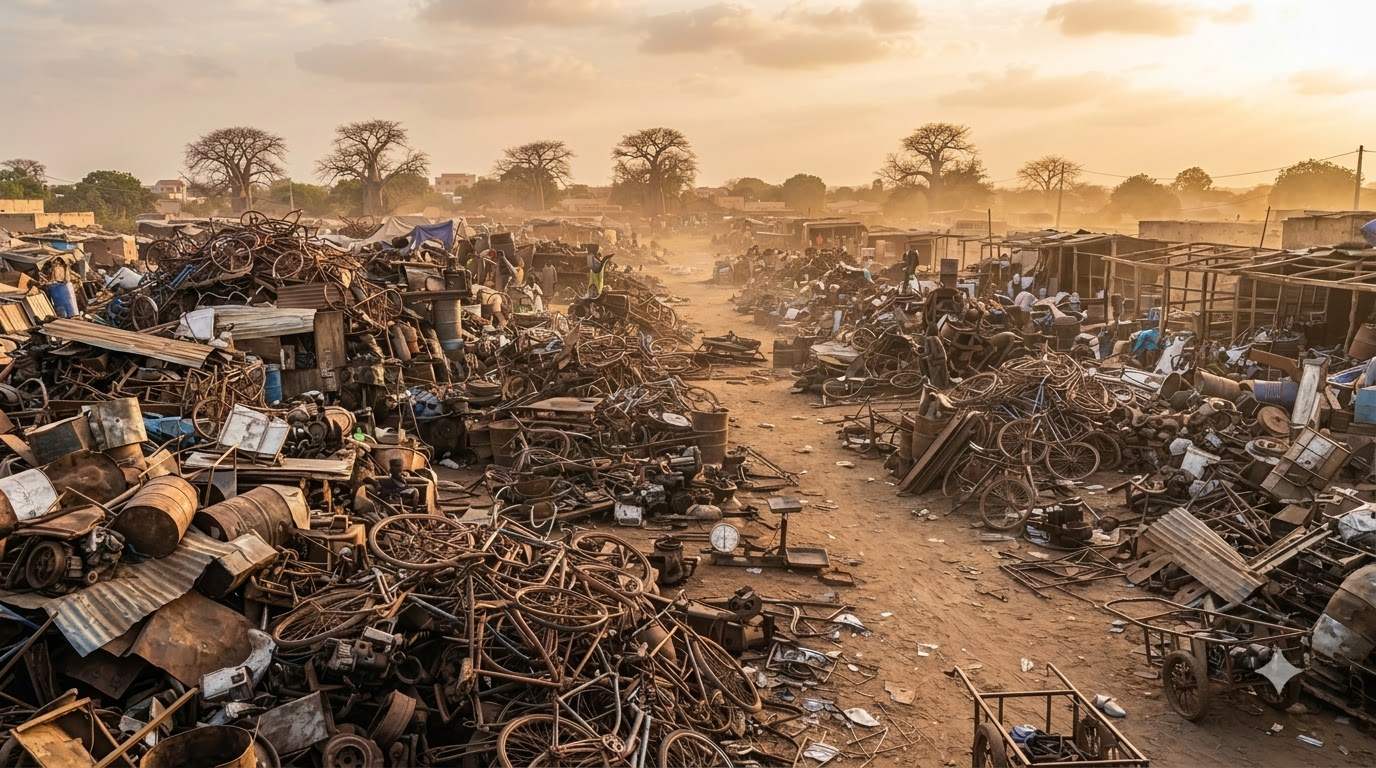
Industrial Dynamics, Trade Regulations, and Value Chain Architecture of the Senegalese Scrap Metal Market
The market for recyclable scrap metal in Senegal operates at the confluence of an extensive informal retrieval economy, national industrial development strategies, and international raw material trade flows. Historically functioning as an unregulated export conduit funneling unprocessed scrap to Asian and European smelters, the domestic sector has undergone significant structural reorganization over the past two decades. Propelled by state policies designed to stimulate domestic value addition and import substitution in the construction materials sector, Senegal has actively cultivated an onshore metallurgical base.
This transition has introduced systemic friction across the value chain. Industrial steelmakers require low-cost, continuous supplies of domestic ferrous feedstock, while commercial scrap exporters operate under fluctuating administrative quotas, and thousands of informal waste pickers rely on competitive, open-market pricing for their daily survival. At the same time, the processing of hazardous scrap fractions—most notably spent automotive batteries and end-of-life electronics has created acute environmental and epidemiological liabilities, prompting targeted legislative action and multilateral circular economy modernization initiatives.
Market Structure and Waste Stream Segmentation
Senegal produces a substantial volume of recyclable metallic waste, driven by rapid urbanization, extensive commercial and residential construction, and an aging vehicle fleet concentrated within the Dakar-Thiès urban corridor. The physical scrap market is divided into three distinct operational segments: ferrous metals, non-ferrous metals, and waste electrical and electronic equipment (WEEE/DEEE), each governed by different technical properties, recovery practices, and market destinations.
Ferrous scrap constitutes the vast majority of recovered metal tonnage in the country. This stream includes heavy melting scrap (HMS 1 and HMS 2) derived from decommissioned shipping vessels at the Port of Dakar, obsolete industrial manufacturing plants, dismantled civil engineering structures, and commercial vehicle chassis. It also encompasses light ferrous scrap, consisting of post-consumer metal containers, discarded roofing sheets, and household appliances, as well as cast iron (fonte) recovered from retired municipal water mains and engine blocks. Earlier foundational studies identified an annual recoverable metal reservoir of roughly 19,500 tonnes in the Dakar region alone; today, broader municipal solid waste generation exceeds three million tonnes nationwide per year, with scrap metals representing a consistently profitable fraction. Domestic rebar manufacturing facilities absorb the bulk of recoverable heavy ferrous grades, while cast iron frequently runs into domestic processing deficits.
Non-ferrous scrap, though significantly lower in aggregate tonnage, accounts for a disproportionate share of market capitalization due to high unit values on international commodity exchanges. The secondary aluminium sector comprises architectural profile extrusions, vehicle engine components, and discarded beverage cans. This fraction feeds both formal export consolidators and a large artisanal foundry ecosystem that casts everyday kitchenware. Copper and brass, reclaimed from utility electrical cables, telecommunications infrastructure, and electric motors, represent the most valuable scrap grades. Because Senegal lacks copper smelting and refining capacity, high-grade copper scrap is aggregated almost entirely for export. Secondary lead is sourced from used lead-acid batteries (ULABs), an economically lucrative but hazardous stream historically recovered through unsafe backyard battery cracking, and now partially channeled through formal, licensed recyclers.
Waste electrical and electronic equipment represents a fast-growing, largely unmanaged waste stream. Driven by widespread imports of second-hand electrical appliances, consumer electronics, and computing hardware, domestic e-waste generation has expanded from historic baselines of 650 tonnes annually to well over 2,000 tonnes per year. The e-waste recovery chain remains largely informal: circuit boards, wiring, and transformers are extracted with primitive hand tools and open-air burning to isolate copper and precious metal fractions, leaving toxic brominated flame retardants, phosphor coatings, and heavy metals uncontained.
| Scrap Classification | Primary Material Provenance | Primary Processing Modality | Dominant Off-Take Channel |
|---|---|---|---|
| Ferrous: Heavy Scrap (HMS 1/2) | Maritime hulls, heavy industrial equipment, structural demolition, truck chassis | Manual torch-cutting, mechanized sorting, shearing | Domestic rebar rolling mills in Sébikotane and Diamniadio |
| Ferrous: Light Sheet & Wire | Post-consumer appliances, metal containers, corrugated roofing | Manual bailing, low-density bundling, magnetic separation | Domestic induction furnaces and secondary scrap yards |
| Ferrous: Cast Iron (Fonte) | Municipal water pipes, heavy mechanical engine blocks, gearings | Heavy manual fragmentation, containerized aggregation | International maritime export (primarily India and Asia) |
| Aluminium: Extrusions & Cast | Automotive parts, engine casings, structural window frames, cans | Manual sorting, decanning, low-technology crucible smelting | Domestic artisanal cooking-pot foundries and export packaging |
| Copper & High-Value Brass | Power grid cabling, electric motor windings, plumbing fittings | Manual insulation stripping, open cable burning, chopping | Export packaging for direct sea shipment to Asian refineries |
| Secondary Lead (ULABs) | Automotive starter batteries, industrial backup power arrays | Manual casing fracturing, mechanical cracking, furnace reduction | Formal domestic lead recycling plants and export bullion trade |
| E-Waste (WEEE / DEEE) | Discarded computers, CRT/LCD screens, cellular devices, cooling units | Manual disassembly, mechanical dismantling, open burning | Informal domestic component reuse and illicit circuit board trade |
Sourcing Architecture and Upstream Aggregation Dynamics
Senegal's scrap metal supply network is organized in a hierarchical, multi-tiered structure. Scrap moves from dispersed waste pickers at municipal dumps and urban demolition sites, through intermediate neighborhood consolidators, and ultimately to high-volume commercial aggregators positioned near major transit corridors.
At the base of the supply pyramid are thousands of informal collectors, known in Wolof as bujuman. In the Dakar metropolitan area, primary collection supports more than 3,000 workers across various materials, with roughly 1,650 informal collectors operating directly within the perimeter of the Mbeubeuss landfill in Malika and Keur Massar. The upstream labor force is predominantly male (over 90%), characterized by low formal educational attainment, and vulnerable to unstable working conditions. Individual pickers harvest an average of 40 to 60 kg of assorted recyclable material daily, working with rudimentary tools such as scrap iron picks, hand hooks, and modified pushcarts (pousses-pousses). Their monthly income rarely exceeds 60,000 to 80,000 FCFA ($100 to $130 USD), leaving them dependent on daily cash advances provided by intermediate buyers to sustain their activities. Beyond formal landfills, itinerant urban collectors move through repair garages, metal workshops, and demolition sites in neighborhoods like Colobane and Médina to gather discarded parts, piping, and reinforcing mesh.
Initial collection feeds directly into intermediate aggregators, local scrap dealers (brocanteurs), and neighborhood sorting yards. These intermediary sites cluster around key logistics junctions:
- On the edges of the Mbeubeuss dumpsite, roughly 115 registered and semi-formal wholesalers (grossistes) maintain collection yards that weigh, clean, and grade scrap brought in by landfill pickers.
- In central Dakar, dense mechanic and metalworking quarters such as Colobane and Pikine-Guédiawaye serve as collection nodes for automotive transmissions, dismantled vehicle shells, and machine components.
- In the interior, Kaolack serves as the primary collection and transit hub for central and southern Senegal, as well as cross-border flows from the Gambia, with trade coordinated by bodies like the Coopérative des Ferrailleurs de Kaolack.
- The industrial corridor spanning Sébikotane and Diamniadio, located 30 to 40 km east of Dakar, acts as the primary point of consolidation, where regional trucks unload bulk ferrous shipments for domestic manufacturing plants.
These intermediate yards provide critical working capital to the informal base, inspect incoming scrap, and perform basic pre-processing. Yard operators use manual magnetic tools to separate ferrous scrap from non-ferrous metals and low-value trash. Oversized steel components, tanks, and vehicle frames are resized using manual oxyacetylene torches to under 1.5 meters so they can fit into industrial induction furnace crucibles. Cable jackets are stripped manually or burned to recover bare copper cores. However, intermediate yards rarely possess advanced processing equipment, such as continuous hydraulic shears or high-density balers. This lack of machinery limits scrap compaction, driving up transport costs and leaving downstream purity levels dependent on visual inspection.
| Aggregation Tier | Operating Profile | Processing Equipment & Infrastructure | Operational Functions | Strategic Geographical Focus |
|---|---|---|---|---|
| Primary Reclaimers (Bujuman) | Informal pickers, itinerant cart collectors, landfill scavengers | Manual hand hooks, sacks, two-wheeled handcarts | Manual recovery, surface scavenging, roadside collection | Mbeubeuss landfill, municipal collection points, auto repair zones |
| First-Stage Yards (Brocanteurs) | Small neighborhood scrap yards, informal metal brokers | Mechanical scales, hand tools, sorting bays | Daily cash aggregation, visual sorting, basic de-sheathing | Colobane, Médina, Thiaroye, Rufisque, Pikine |
| Wholesale Aggregators (Grossistes) | Licensed scrap merchants, export packing yards, transport brokers | Oxyacetylene cutting torches, mechanical weighbridges, flatbeds | Bulk weighing, sizing, manual shearing, trade financing | Mbeubeuss peripheral platforms, Kaolack freight hubs |
| Industrial Intake Platforms | Direct factory-gate receiving yards (Steel mills, refiners) | Overhead cranes, heavy electromagnets, industrial shears | Chemical testing, electromagnetic sorting, furnace batching | Sébikotane and Diamniadio industrial manufacturing corridors |
Downstream Industrial Processing and Secondary Smelting
Senegal's downstream scrap sector has shifted from basic export consolidation toward capital-intensive domestic manufacturing. This transition centers on the industrial growth corridor of Sébikotane and Diamniadio, where modern steel mills, secondary foundries, and non-ferrous processing plants operate.
The domestic market for heavy ferrous scrap is anchored by two major industrial steelmakers: Société Métallurgique d'Afrique (SOMETA) and Fabrimetal Sénégal. SOMETA, established around 2011–2012 at Km 40 on the National Road in Sébikotane, was Senegal's first modern scrap-melting and steel-rolling facility. The facility operates electric induction furnaces and a continuous rolling line with an annual production capacity of approximately 100,000 tonnes of finished steel products. SOMETA melts local scrap, blended with imported ferro-alloys, to manufacture high-yield structural reinforcing bars (grades FE500 and B500B), angle irons (cornières), and drawn wire, substituting for imported steel billets.
Fabrimetal Sénégal, a subsidiary of the multinational MMD Steel Group, began production in Diamniadio and Sébikotane in March 2019. It commissioned a modern rolling mill designed by the German engineering firm SMS group, achieving production yields of 98.5% well above the 93.5% average typical of older facilities across West Africa. Fabrimetal processes scrap into international-standard B500B™ TMT® rebar to supply major infrastructure, commercial, and residential construction projects across Senegal, reducing the country's reliance on foreign imports.
Together, SOMETA and Fabrimetal form an industrial duopoly that consumes large volumes of domestic ferrous scrap. When running at full capacity, their induction furnaces require thousands of tonnes of scrap per month, often outstripping the collection capacity of local supply networks. Consequently, both firms actively lobby the Senegalese government to restrict scrap exports, arguing that domestic raw materials must be reserved to protect local industrial investments, sustain formal manufacturing jobs, and lower domestic rebar prices.
Outside the primary steel sector, secondary and artisanal foundries absorb specialized non-ferrous and cast metal grades:
- A network of small-scale artisanal foundries, concentrated around Thiès and the outskirts of Dakar, melts scrap aluminium in basic crucible furnaces fueled by charcoal or spent motor oil. These workshops cast domestic cooking pots (fourneaux and marmites) that supply low-income households across Senegal and neighboring countries. While these foundries provide affordable consumer goods, their simple furnaces suffer from thermal inefficiency and metal oxidation losses, and operate without industrial emission controls.
- Discarded cast iron (fonte) and bronze scrap historically supported specialized foundries casting municipal infrastructure components, such as sewerage covers, storm drain grates, and agricultural tools, though rising energy costs have curtailed output.
The secondary lead recovery market is organized around formal industrial recyclers, notably Pagrik S.A. (a subsidiary of the India-based Gravita Group) located in Sébikotane. Pagrik processes used lead-acid batteries, utilizing semi-automated battery breakers, acid neutralization circuits, and secondary reduction furnaces to produce refined lead ingots for export. However, secondary lead processing remains controversial. Despite regulatory oversight, facilities run by Pagrik and competitors have faced local protests and administrative closures following community concerns over airborne lead emissions, dust fallouts near surrounding mango orchards, and the risk of chronic lead poisoning.
| Manufacturing Entity | Operational Site | Core Scrap Input Stream | Primary Finished Output | Industrial Technology Employed |
|---|---|---|---|---|
| SOMETA S.A. | Sébikotane (Route Nationale 2, Km 40) | Heavy ferrous scrap, vehicle frames, structural offcuts | FE500 & B500B concrete rebar, angle iron, commercial wire | Medium-frequency electric induction furnaces, continuous bar mill |
| Fabrimetal Sénégal | Diamniadio / Sébikotane industrial zone | Clean heavy melting steel, shredded ferrous scrap | Certified B500B™ TMT® high-yield reinforcing steel bar | SMS group automated bar and wire rod rolling mill (98.5% yield) |
| Pagrik S.A. (Gravita) | Sébikotane industrial periphery | Used Lead-Acid Batteries (ULABs), lead scrap | Remelted lead bullion, refined lead ingots, lead-antimony alloys | Mechanical battery breaking, chemical neutralization, rotary blast furnace |
| Artisanal Smelting Sector | Dakar periphery, Pikine, Thiès industrial communes | Aluminium profile offcuts, scrap automotive casings, used cans | Traditional cast cooking vessels (marmites), sanitary drainage grates | Small-scale refractory crucible hearths fired with coke and waste lubricants |
Regulatory Architecture, Export Bans, and Trade Policy Tensions
Senegal's scrap metal regulatory policy reflects an ongoing debate between state-led industrial protectionism and open-market commerce. The regulatory environment has alternated between full export bans, administrative quota systems, and negotiated pricing protocols, reflecting competing pressures between industrial steelmakers and independent scrap merchant federations.
The foundation of modern scrap trade policy was established by Décret n° 2013-587 du 2 mai 2013, signed by President Macky Sall, which suspended the export of ferrous scrap and related sub-products collected within the country. The decree’s explicit goal was to build a domestic heavy industrial base by guaranteeing low-cost, local raw materials for domestic steel mills and foundries. However, this broad export suspension created significant market imbalances. By cutting off access to international buyers, the decree concentrated purchasing power within a small group of domestic steelmakers. Factory-gate purchase prices dropped sharply, reducing margins for scrap collectors and wholesalers.
At the same time, domestic mills were technically unable to melt high-phosphorus cast iron (fonte) or absorb the total volume of scrap generated nationwide, leaving tens of thousands of tonnes of material stranded in storage yards. These imbalances led to strikes by the Fédération Nationale des Ferrailleurs, Brocanteurs et Recycleurs du Sénégal and fueled illicit cross-border smuggling into neighboring countries with open export regimes, such as the Gambia.
To correct these distortions, the Ministry of Commerce issued Arrêté ministériel n° 16.592 du 14 novembre 2016, which replaced the absolute ban with a regulated export licensing and quota system for ferrous and non-ferrous scrap. Under this framework, export licenses are issued selectively by the Minister of Commerce based on recommendations from the Comité Technique de Suivi du secteur de la Ferraille. This inter-ministerial body evaluates whether domestic steel mills hold sufficient feedstock reserves before approving export permits for surplus scrap, such as cast iron and specialized non-ferrous grades.
Enforcement of the quota system has proven challenging, leading to renewed regulatory disputes. In early 2023, mounting feedstock deficits prompted the government to issue temporary export suspensions for scrap iron. On 19 June 2023, the Ministry of Commerce convened industrial manufacturers, scrap exporters, and scrap dealer associations to sign a formal Protocole d'Accord in Diamniadio. This tripartite agreement aimed to stabilize the market by:
- Setting guaranteed minimum factory-gate purchase prices payable by SOMETA and Fabrimetal to scrap collectors.
- Regulating export licensing windows for surplus scrap grades that domestic mills cannot process.
Despite this agreement, regulatory disputes have persisted. Following political transitions in 2024, delays in renewing export licenses left more than 20,000 tonnes of cast iron stuck in intermediary collection yards, creating financial distress for licensed exporters and prompting direct petitions to President Bassirou Diomaye Faye and the Minister of Industry and Commerce, Serigne Guèye Diop.
Beyond commercial trade policy, scrap processing is governed by national environmental and hazardous waste legislation:
- Loi n° 2001-01 (Environmental Code): Requires formal recycling and metallurgical processing plants to submit Environmental and Social Impact Assessments (ESIA), obtain operational permits from the Direction de l'Environnement et des Établissements Classés (DEEC), and comply with atmospheric emission and industrial wastewater standards.
- Decree of 2010 on Used Lead-Acid Batteries: Aims to formalize battery collection channels, ban manual acid dumping into open soil, and restrict ULAB collection and recycling to licensed facilities.
- Basel Convention Commitments: Senegal actively enforces the Basel Convention and its Ban Amendment to prevent the transboundary dumping of hazardous e-waste and industrial chemical residues into West Africa.
| Legislative & Policy Instrument | Enactment Date | Responsible Authority | Core Mandates and Provisions | Impact on Domestic Market Operations |
|---|---|---|---|---|
| Décret n° 2013-587 | 2 May 2013 | Presidency of the Republic / Ministries of Industry and Finance | Suspended the commercial export of scrap iron and ferrous sub-products | Lowered domestic scrap prices; created industrial monopsony; led to cast iron surpluses |
| Arrêté n° 16.592 | 14 November 2016 | Ministry of Commerce, Consumption, and SMEs | Replaced export ban with a quota and licensing system managed by a technical committee | Restored formal export channels for non-meltable surplus scrap and non-ferrous metals |
| Loi n° 2001-01 (Code Environnement) | 15 January 2001 | Ministry of Environment / DEEC | Requires environmental impact studies, atmospheric emission limits, and wastewater controls | Increased compliance scrutiny on secondary lead recyclers and industrial steel mills |
| Décret de Gestion des BPAU | Promulgated 2010 | Ministry of Environment / Ministry of Health | Regulates handling of used lead-acid batteries, banning open dumping of acid electrolytes | Attempted to curb informal battery breaking; led to industrial licensing for firms like Pagrik |
| Protocole d'Accord Sectoriel | 19 June 2023 | Ministry of Commerce, industrial mills, scrap dealer federations | Set factory-gate minimum floor prices and structured surplus export permit allocations | Addressed price drops, but faced recurring delivery strikes and permit backlogs |
Trade Flows, Border Arbitrage, and Global Destinations
Senegal serves as both a net exporter of metallic scrap and a maritime transit hub for scrap originating across landlocked West Africa.
According to international trade data and United Nations Comtrade statistics compiled by the Observatory of Economic Complexity (OEC), Senegalese exports of ferrous waste and scrap under Harmonized System Code 7204 total roughly $30.2 million annually. These exports are heavily concentrated geographically: India represents the primary destination, purchasing approximately $28.6 million worth of scrap metal, or more than 94% of Senegal's total foreign ferrous shipments. Indian buyers import cast iron, heavy melting scrap, and remelting ingots via containerized shipments through the Port of Dakar to feed secondary induction and electric arc furnaces. Other smaller destinations include the Netherlands ($554,000), the United Arab Emirates ($404,000), Spain ($249,000), and Ukraine ($230,000). Conversely, Senegal’s formal imports of ferrous scrap remain minimal, totaling approximately $307,000 annually, sourced mainly from Spain, Italy, France, and cross-border transit from the Gambia.
Trade in non-ferrous scrap follows similar international routes:
- Secondary aluminium scrap (HS Code 7602) generates an estimated $1.0 to $2.5 million in annual exports, with shipments directed to secondary refiners in India, Ukraine ($552,000), and regional trading partners including Ghana, Burkina Faso, and Togo.
- Copper and brass waste (HS Code 7404) generate between $2.0 and $4.5 million annually, driven by high global prices on the London Metal Exchange (LME). These materials are gathered by domestic collectors and shipped to processing plants across Asia and Europe.
- Secondary lead scrap (HS 7802) and battery residues are consolidated by specialized exporters for shipment to overseas chemical and battery manufacturing operations, primarily in India.
Cross-border transit trade through Senegal plays a major role in regional scrap flows:
- The Gambian Corridor: The open border between Senegal and the Gambia creates continuous price arbitrage. The Gambia exports substantial volumes of scrap metal ($8.55 million annually, with $8.4 million bound for India). When Senegal enforces export bans, domestic scrap is frequently smuggled across southern borders into the Gambia to utilize Gambian maritime export channels. Conversely, when Senegalese mills offer higher prices, Gambian scrap flows north into Sébikotane.
- The Malian Transit Corridor: High-capacity freight corridors connecting Bamako to the Autonomous Port of Dakar routinely transport scrap metal, retired mining equipment, and discarded utility infrastructure. Returning freight haulers use scrap cargo to offset empty leg costs on backhaul journeys to the coast.
| HS Code | Commodity Description | Total Export Value (USD) | Primary Export Destinations | Key Sourcing / Import Origins |
|---|---|---|---|---|
| HS 7204 | Ferrous waste and scrap; remelting scrap ingots | ~$30.2 Million | India (94.7%), Netherlands, UAE, Spain, Ukraine | Spain ($170k), Gambia ($79.6k), Italy ($43k) |
| HS 7602 | Aluminium waste and scrap | ~$1.0 – 2.5 Million | India, Ukraine ($552k), Ghana, Togo, Burkina Faso | Regional intra-ECOWAS border transit |
| HS 7404 | Copper and copper alloy waste and scrap | ~$2.0 – 4.5 Million | India, China, UAE, Western Europe | Domestic grid recovery; Mali backhaul trade |
| HS 7802 / 8548 | Spent lead-acid batteries and lead residues | ~$1.5 – 3.0 Million | India, East Asian industrial smelters | Domestic informal gathering networks |
Price Formation, Value Chain Margins, and Operational Logistics
Prices in the Senegalese scrap metal market reflect significant markups between primary waste pickers, intermediate wholesalers, and industrial buyers.
At the base of the chain, waste pickers receive between 40 and 75 FCFA per kilogram ($0.065 to $0.12/kg) for mixed light ferrous scrap. Heavy structural scrap commands a modest premium, selling for 60 to 80 FCFA/kg. Aluminium scrap sells for 175 to 250 FCFA/kg for thin packaging and beverage cans, and 250 to 300 FCFA/kg for cast vehicle components. Copper wire sells for 2,000 to 3,500 FCFA/kg, depending on cleanliness and whether the insulation was stripped mechanically or burned.
At the wholesale level, intermediate aggregators consolidate materials and sell bulk ferrous scrap to SOMETA or Fabrimetal at baseline factory-gate prices ranging from 115 to 150 FCFA/kg (115,000 to 150,000 FCFA per metric tonne). Under competitive conditionsm such as during active export windows factory-gate prices have reached 175 to 220 FCFA/kg (175,000 to 220,000 FCFA/t). However, unilateral price cuts by domestic mills, such as drops from 220 down to 175 FCFA/kg, can reduce wholesale margins by 45,000 FCFA per tonne, sparking protests and supply holdbacks.
At the top of the chain, domestic steelmakers convert scrap into structural rebar (fer à béton), which retails in the Senegalese construction sector for 38,000 to 55,000 FCFA per 100 kg (380,000 to 550,000 FCFA per tonne), depending on bar thickness and regional transport surcharges. This pricing structure highlights the substantial gross margins generated between low-cost informal scrap collection and finished building materials.
Supply chain logistics and financial constraints significantly shape operational costs for scrap merchants:
- Transport Economics: Scrap is hauled from urban collection yards to Sébikotane using rented flatbed trucks (camions bennes). Because uncompacted scrap has a low bulk density, transport costs account for 15% to 25% of total wholesale operating expenditures. Unpaved access roads and congestion around sites like Mbeubeuss also increase vehicle wear, fuel consumption, and transit turnaround times.
- Working Capital and Cash Constraints: Upstream collection relies entirely on cash-on-delivery transactions. Neighborhood yards require rolling working capital reserves of 1,000,000 to 1,400,000 FCFA to purchase daily scrap from informal pickers. In contrast, large industrial mills often operate on 30- to 90-day payment schedules. This payment gap places severe financial pressure on wholesale aggregators, limiting their ability to hold inventory and leaving them vulnerable to price cuts.
| Scrap Classification | Collector Price (Bujuman) (FCFA/kg) | Wholesale Aggregator Gate Price (FCFA/kg) | Industrial Gate / FOB Port Price (FCFA/kg) | Finished Wholesale Benchmark (FCFA/kg equiv.) |
|---|---|---|---|---|
| Ferrous: Light Sheet | 40 – 75 | 80 – 100 | 115 – 135 | 380 – 490 (Light structural rebar) |
| Ferrous: Heavy (HMS 1/2) | 60 – 80 | 100 – 130 | 140 – 175 | 470 – 550 (Heavy certified rebar) |
| Ferrous: Cast Iron (Fonte) | 50 – 70 | 90 – 120 | 140 – 180 (Export FOB) | International market pricing |
| Aluminium: Heavy / Castings | 250 – 300 | 310 – 350 | 350 – 425 | 800 – 1,200 (Cast cookware) |
| Aluminium: Light Sheet & Cans | 175 – 250 | 250 – 290 | 320 – 360 | 700 – 1,000 (Artisanal utensils) |
| Copper: Bare Bright Wire | 2,200 – 3,500 | 3,800 – 4,500 | 5,000 – 6,200 (Export FOB) | London Metal Exchange benchmark |
| Used Lead Batteries (ULABs) | 150 – 250 | 300 – 400 | 450 – 550 (Smelter Gate) | LME secondary refined lead |
Environmental Liabilities, Modernization Initiatives, and Policy Outlook
Senegal's scrap metal sector faces significant occupational, health, and environmental challenges, alongside public and multilateral initiatives aimed at modernizing urban waste collection.
The informal recycling of hazardous scrap has led to serious public health incidents in urban Senegal:
- The Thiaroye-sur-Mer Disaster: Between November 2007 and March 2008, informal battery dismantling and open-air lead smelting in the Ngagne Diaw neighborhood of Thiaroye-sur-Mer caused the deaths of at least 18 young children from acute lead poisoning (saturnisme) and encephalopathy. Subsequent epidemiological investigations conducted by the World Health Organization (WHO) revealed blood lead concentrations exceeding 1,000 µg/L in surviving family members, alongside severe neurological deficits. While approximately 300 tonnes of contaminated soil were removed and replaced with clean sand, heavy metal residues continue to impact local soils and groundwater.
- Industrial Emissions in Sébikotane: Industrial steel mills and secondary battery smelters operating along the Sébikotane corridor have generated friction with surrounding farming communities. Residents and local agricultural cooperatives have documented damage to commercial mango orchards, groundwater contamination, and elevated rates of acute respiratory illness linked to the release of untreated metallurgical smoke, particulate matter ($PM_{2.5}$), and heavy metal fumes.
- Open Burning of E-Waste and Cables: Across scrap collection zones in Colobane, Pikine, and Mbeubeuss, informal workers routinely burn insulated copper wiring, automotive harnesses, and electronic scrap over open fires to extract metals. This practice releases persistent organic pollutants, including dioxins, furans, and polycyclic aromatic hydrocarbons (PAHs), exposing urban populations to toxic airborne emissions.
To address these environmental and operational challenges, the Government of Senegal launched PROMOGED. Supported by over $300 million in combined financing from the World Bank, the French Development Agency (AFD), the Spanish Agency for International Development Cooperation (AECID), and the national government, PROMOGED aims to modernize waste management across Dakar, Thiès, and Saint-Louis. Key initiatives include:
- The phased environmental remediation and capping of the 144-hectare open-air dumpsite at Mbeubeuss, transforming it into an engineered sanitary waste site.
- The implementation of a Livelihood Restoration Plan to protect the incomes of thousands of informal waste pickers through formal employment and retraining programs.
- The construction of integrated waste recovery platforms equipped with mechanical sorting screens, magnetic separators, and industrial shears to formalize ferrous and non-ferrous recovery.
- Support for scrap worker cooperatives, notably the Bokk Diom reclaimer association at Mbeubeuss. By establishing formal Economic Interest Groups (GIE), pickers can consolidate scrap volumes, acquire shared processing tools like balers and shears, bypass intermediary brokers, and supply steel mills directly with commercial quantities exceeding 300 to 500 tonnes per month.
Strategic Synthesis
Senegal's scrap metal sector functions as a vital industrial and macroeconomic resource: it supplies feedstock for domestic infrastructure materials, provides flexible income for thousands of informal workers, and generates foreign exchange through non-ferrous and cast iron exports. However, sustainable development in the sector requires addressing several structural imbalances:
- Trade Regulation and Monopsonistic Pressures: Blanket bans on scrap metal exports create significant domestic market distortions. While designed to support domestic mills like SOMETA and Fabrimetal, broad export bans create industrial monopsonies that depress purchase prices for upstream collectors, incentivize cross-border smuggling into the Gambia, and leave domestic mills unable to process surpluses of high-phosphorus cast iron. Replacing trade bans with transparent, semi-automated export licensing contingent on domestic mill feedstock inventories is necessary to stabilize sector revenues and reduce administrative backlogs.
- Cooperative Formalization: To reduce the economic vulnerability of primary collectors, state programs such as PROMOGED should expand support for collector cooperatives and Economic Interest Groups. Providing organized pickers with shared pre-processing infrastructure such as mobile balers, mechanized shears, and magnetic separators will improve scrap purity, allow direct bulk delivery to mills, and ensure fair price realization.
- Environmental and Health Safeguards: Regulatory enforcement must strictly separate standard ferrous recovery from hazardous scrap streams. Enforcing the 2010 Decree on Used Lead-Acid Batteries and expanding continuous air-quality monitoring around industrial smelters in Sébikotane are critical steps to prevent lead contamination disasters like the one at Thiaroye-sur-Mer.
- E-Waste Management Framework: Establishing a dedicated national framework for Waste Electrical and Electronic Equipment (DEEE) incorporating Extended Producer Responsibility (EPR) mandates is vital to channel valuable electronics scrap toward formal recovery facilities while eliminating the open burning of insulated wiring.
Balancing the resource needs of heavy domestic industrial mills with transparent export channels, improved labor conditions, and enforced environmental standards will determine whether Senegal can transform its scrap metal trade into a modern, sustainable circular economy.