

Steel beams from a demolished building look valuable, and they can be, but the Australian rules for structural steel make reuse harder than it looks. A beam that is perfectly good may still be unusable in a new structure because nobody can show what grade it is. This guide covers what we could find on the difference between reuse and scrap, what the Australian steel standard assumes and what to do with beams that cannot be certified. The sources are engineering and standards-body pages, not a regulator's guidance on salvaged steel, and we did not find anything on second-hand scaffolding. We give no prices, and nothing here is engineering advice. It follows our guide to reclaimed timber and bricks. ScrapTrade runs a scrap marketplace and has a commercial interest in the scrap trade.
What the standard assumes
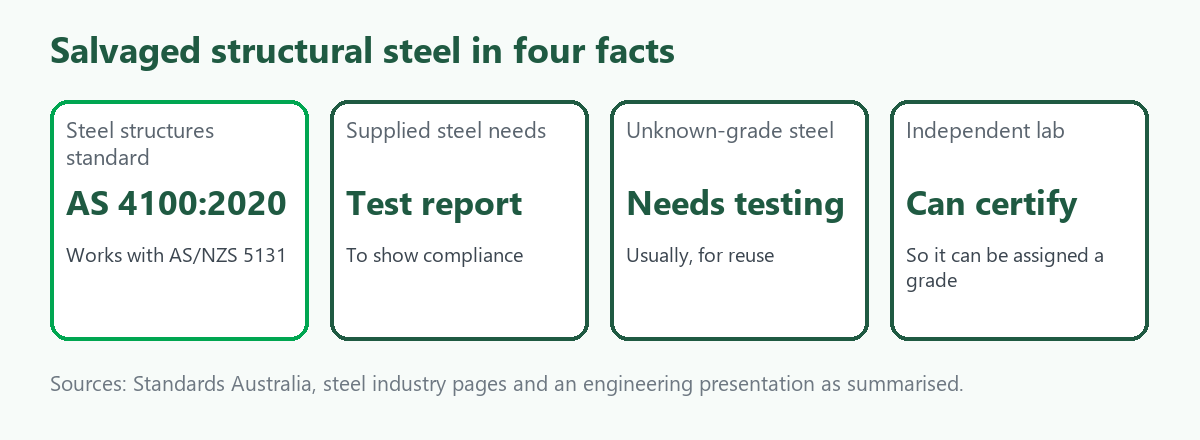
The current edition of AS 4100 is AS 4100:2020, Steel Structures, which works alongside AS/NZS 5131:2016 on fabrication and erection. According to the sources we read, supplied steel must come with a test report or certificate meeting the minimum requirements of the standards for the individual steel product, so that compliance with AS 4100 can be shown. One engineering presentation notes that AS 4100 assumes the material used on site meets those standards. Unknown-grade salvaged steel usually cannot meet this without testing, in our reading of the sources.
Reuse needs testing and an engineer
Where no independent verification exists, one source says serious consideration should be given to independent testing, and another says the route is to have an independent laboratory test and certify the steel so it can be assigned to a grade. The same presentation advises that third-party certification by a reputable organisation is a wise investment. A certification system for steelwork exists, in which a fabricator is audited by an accredited certifier, though that is about fabrication and not salvage. We found nothing on the cost or the process for salvaged steel in practice, and we are not engineers, so any reuse should be decided by a structural engineer.
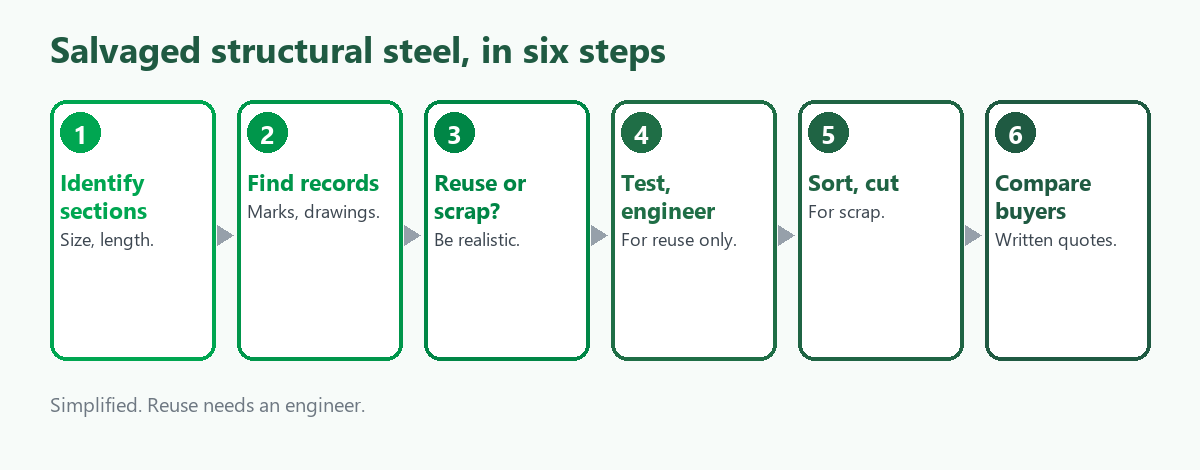
What this means for a seller is that unmarked steel is hard to sell as structural steel. If a beam has mill markings, an original drawing or a purchase record that shows its grade, that helps, and a buyer who wants to reuse it will ask. Without it, the realistic buyer is a scrap yard.
Scrap is the usual route
For steel that cannot be certified, scrap is the floor. A yard pays by weight and grade, and long beams may need cutting to length, which a yard may do or ask you to do. We found two conflicting sources on what steel scrap trades at in Australia, so we give no figure. Ask for a written quote and compare two or three yards. Our guide to scrapping a trailer or caravan and the stainless steel scrap prices page cover related steel questions.
Scaffolding
We found nothing on selling or reusing second-hand scaffolding, including the work health and safety obligations, so we do not cover it. If you have scaffolding to sell, ask your state regulator, such as SafeWork or WorkSafe, and any buyer, what they require.
Questions to ask
- To a yard: Do you take beams whole or cut? What length limits apply? Do you collect?
- To a steel merchant or reuse buyer: Do you buy salvaged sections, and what documents do you need?
- To a structural engineer: What testing or certification would reuse of this steel need?
- To anyone buying: What do you need to know about the section, length, condition and any records?
Where ScrapTrade fits
ScrapTrade does not test steel or certify it for reuse. For beams that will go for scrap, a demolition contractor, a fabricator or a builder with a quantity of sorted structural steel may find the marketplace useful: it costs nothing to list, there is no commission, terms are negotiated in chat and the buyer's 5 percent deposit is held in escrow after a bid is accepted. Businesses and individuals can sell once verified, and buyers in more than 50 countries bid. Whether structural sections are accepted, and how they are graded, is not something we could confirm, so ask cs@scraptrade.com.au first.
For shipping containers, see Sell or Scrap a Shipping Container.
What we could not verify
- What a yard pays for beams. We give no prices.
- The cost and process of certifying salvaged steel.
- Regulator guidance on reusing salvaged steel.
- Second-hand scaffolding rules.
- Whether ScrapTrade accepts structural sections.
Frequently asked questions
Can I sell salvaged steel beams?
Yes, to a yard as scrap, or to a reuse buyer if the grade can be shown. Unmarked steel is usually scrap.
Can salvaged steel be reused in a new building?
Only if it can be shown to meet the standard, which unknown-grade steel usually cannot without testing. Ask a structural engineer.
How is unknown steel graded?
An independent laboratory can test and certify it so it can be assigned a grade, according to one source.
Do yards take long beams?
Some do, and some want them cut. Ask.
Can I list steel beams on ScrapTrade?
Verified sellers can list scrap. Ask support about structural sections.
Sources
- Standards Australia and steel industry pages on AS 4100:2020 and AS/NZS 5131:2016, and an engineering presentation on steel compliance, as summarised in search results.
- ScrapTrade website, accessed November 2026.
General information only, not engineering, legal or financial advice. Reuse of structural steel should be assessed by a structural engineer.