

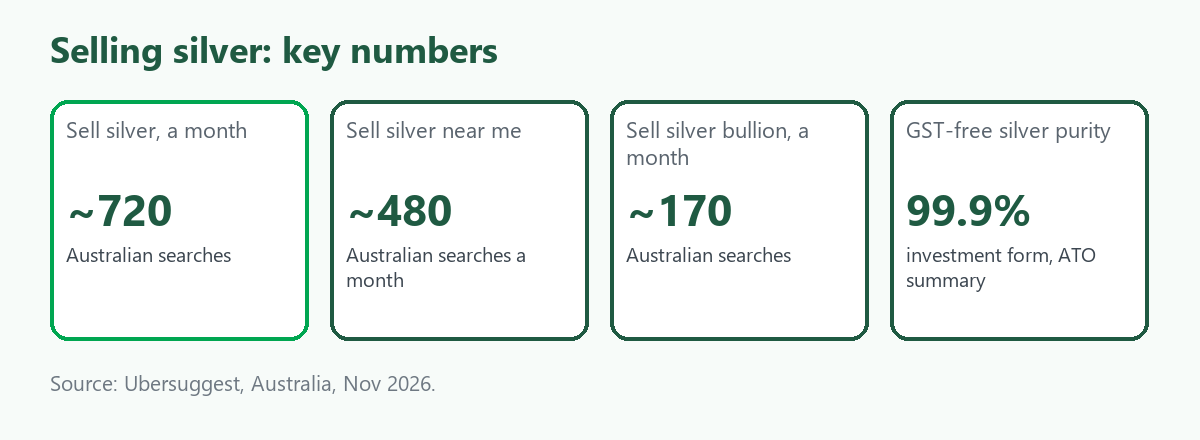
"Sell silver" is the largest precious-metal search in Australia, about 720 times a month, according to Ubersuggest. Around it sit "sell silver near me" at about 480, "sell silver melbourne" about 320, "where to sell silver" about 320, "sell silver in sydney" about 260, "sell silver bullion" about 170, "sell silver coins" about 90 and "sell silver cutlery" about 50. The word covers four different things: investment bullion, coins, household sterling and scrap, and they are sold in different places for different reasons. This guide separates them and explains purity, tax and routes. It is part of our guide to selling old gold, silver and jewellery. We quote no prices, because we found no reliable current silver figure, and ScrapTrade has a commercial interest in the scrap trade.
Four kinds of silver
- Bullion. Bars and rounds of high purity, usually 99.9 percent. Dealers usually publish buy prices, and one Australian dealer quotes 98 percent of spot for certified gold bars.
- Coins. Some are priced on metal and some on collector demand. See Sell Old Coins in Australia.
- Sterling and household silver. Jewellery, cutlery, trays and ornaments. Sterling is 92.5 percent silver, usually stamped 925, and its value as an object can differ from its metal value.
- Scrap. Broken pieces, industrial offcuts and mixed lots, priced on weight and purity.
Silver-plated items carry only a thin coating of silver, so a buyer may pay very little for them. If an item has no purity stamp, do not assume it is sterling, and ask the buyer to test it.
How purity sets the price
Like gold, silver is priced on weight, purity and the spot price, less the buyer's margin. A 100 gram sterling item holds about 92.5 grams of silver, and the buyer pays a percentage of that metal value. We did not find a source for the payout percentages that Australian silver buyers use, so compare at least two quotes and ask each one how the number is worked out. Spot silver moves quickly, and a quote can change within a day, so ask how long it is valid.
Tax points
The Australian Taxation Office treats investment-form silver at 99.9 percent purity or above as GST-free, according to our reading of its guidance and the sources below. Jewellery, cutlery and collector coins are ordinary taxable goods when a business sells them. A private seller who is not registered for GST does not charge it. For capital gains tax, jewellery and coins are collectables, and a gain is disregarded where the cost base is A$500 or less. Bullion held as an investment can have a capital gain. Business-to-business scrap sales have their own GST mechanism, which we explain in Sell Scrap Gold and Silver in Bulk. We are not tax advisers, and sources conflicted on some points, so check with an adviser.
Where to sell each kind
- Bullion dealers. Best for bars, rounds and high-purity coins. Most publish buy prices.
- Local jewellers and gold buyers. Many buy silver scrap and cutlery as well. Ask.
- Pawn shops. Quick, and generally paying a lower percentage of metal value, according to one gold-dealer source.
- Antique and auction sellers. For sterling pieces worth more as objects, such as a maker's tea set.
- A trade marketplace. For accumulated scrap or business lots.
Whoever buys, licensed second-hand dealers will ask for ID and keep records. See Sell Unwanted or Broken Jewellery in Australia. For market context, our silver price analysis covers the October 2026 outlook.
Where ScrapTrade fits
The silver searchers who match ScrapTrade are not the people with a spoon. They are a jeweller with offcuts and sweeps, a photographic or electronics business with silver-bearing waste, a collector's estate with sorted cutlery, or an investor selling a quantity. Lots of that kind are described by weight and purity, which is how traders buy. ScrapTrade has a precious metals category and verified buyers in more than 50 countries, and listing is free with no commission. You list the weight, the purity marks and photos, negotiate in real time and agree collection or shipping terms. The buyer's 5 percent deposit sits in escrow once a bid is accepted. Both businesses and individuals can sell after verification. We do not know how ScrapTrade handles purity testing or the insurance of valuable parcels, so ask cs@scraptrade.com.au first.
International readers: How to Work Out What Your Silver Is Worth.
What we could not verify
- The current silver price and buyer payout percentages. We found no reliable source.
- Australian silver buyers' testing methods.
- The detail of GST treatment for your situation. We relied on search summaries of ATO pages.
- How ScrapTrade tests or insures silver parcels.
- ScrapTrade's verification steps. Ask support at cs@scraptrade.com.au.
Frequently asked questions
How do I sell silver in Australia?
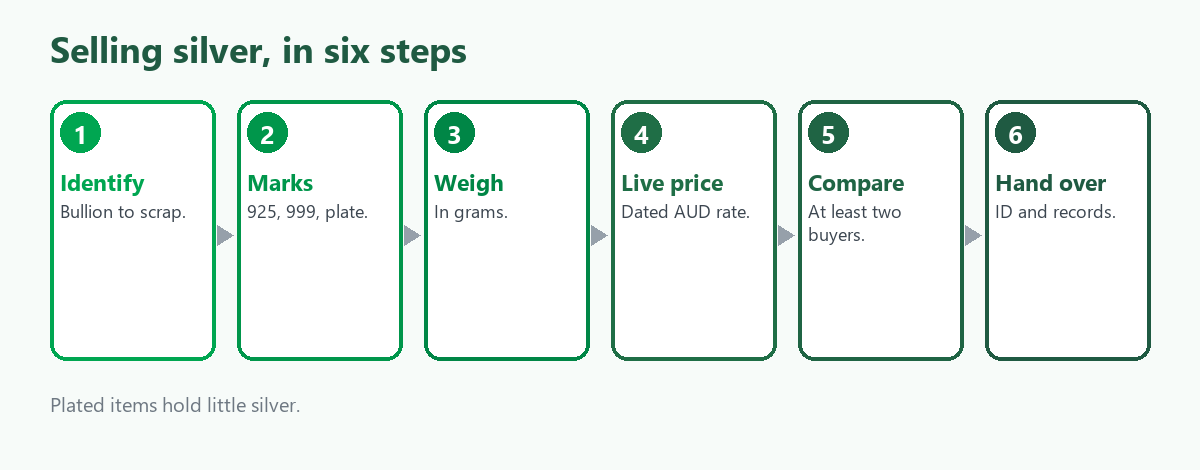
Identify the type, check the purity marks, weigh it, compare at least two quotes and bring photo ID.
Is sterling silver worth more than plated silver?
Yes, because plated items hold only a thin coating of silver. Ask a buyer to test unmarked pieces.
Is silver bullion GST-free?
Investment-form silver of 99.9 percent purity or above is GST-free, according to the ATO guidance we found. Jewellery is taxable.
Can I sell silver on ScrapTrade?
Precious metals are a category, and businesses and individuals can sell after verification.
Sources
- Ubersuggest keyword data for Australia, queried November 2026.
- Australian Taxation Office GST guidance on precious metals and the valuable metals reverse charge, as summarised in search results.
- Australian Taxation Office capital gains tax guidance on collectables, as summarised in search results.
- Australian gold-dealer pages on payout percentages, as summarised in search results.
- ScrapTrade website, accessed November 2026.
This is general information, not financial or tax advice. ScrapTrade is a scrap marketplace.